Меню
Разработки
Разработки  /  Английский язык  /  Презентации  /  10 класс  /  Презентация по английскому языку "Ecology Problems"

Презентация по английскому языку "Ecology Problems"

Презентация поможет расширить по сравнению с базовым уровнем знания учащихся об экологическом положении в мире.
14.12.2014

Описание разработки

Цели урока:

1. Освоение темы «Экологические проблемы», введение лексики по теме «Экология»

2. Расширить по сравнению с базовым уровнем знания учащихся об экологическом положении в мире

3. Активизировать учебные умения и навыки.

Ход урока

Начало урока. Приветствие.

Good morning, friends! I am glad to see you. Sit down please.

Беседа. - What do you know about Ecology?

 - Is the human health bound with the condition of the environment?

 - How can the bad ecology influence on the human`s health?

Объявляется тема урока: Ecology Problems. (слайд №1)

2. А) Введение нового материала. (слайд №2) чтение и перевод текста слайда:

Б) Введение основной лексики по теме. Аудирование и фонетическая отработка лексики (слайд №3):

3. Закрепление нового материала. Чтение и перевод текста слайдов №4 , №5 №6 №8 №9 №10

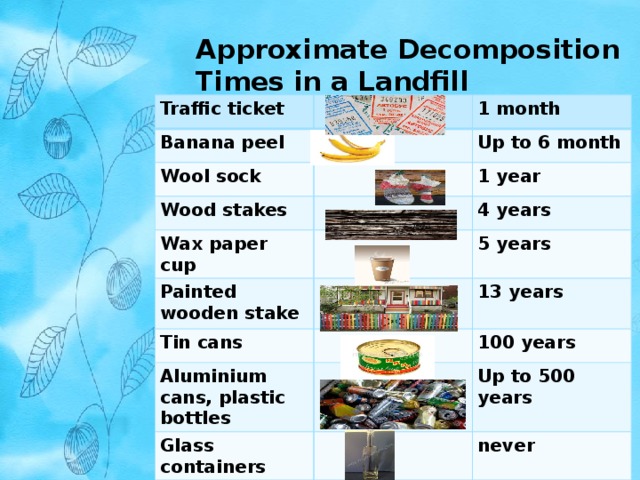
Слайд №14 «Примерное разложение различного мусора на свалке». Учащиеся читают и переводят приведенные факты, делают выводы.

Презентация по английскому языку Ecology Problems

Контроль усвоения изученного материала. Учащиеся отвечают на вопросы:

 - What are ecology problems?

 - What are the main ecology problems in our town?

 - What must people do to solve these problems?

 - How can we help to save our Planet?

Подведение итогов урока. Оценки.
Содержимое разработки

Ecology Problems

Ecology Problems

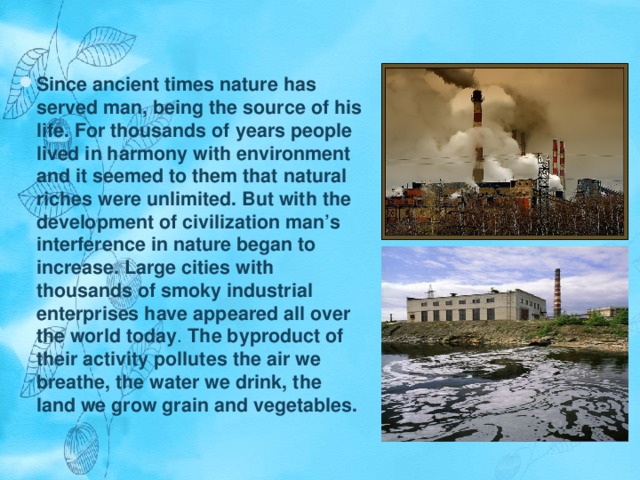
Since ancient times nature has served man, being the source of his life. For thousands of years people lived in harmony with environment and it seemed to them that natural riches were unlimited. But with the development of civilization man’s interference in nature began to increase. Large cities with thousands of smoky industrial enterprises have appeared all over the world today . The byproduct of their activity pollutes the air we breathe, the water we drink, the land we grow grain and vegetables.
  • Since ancient times nature has served man, being the source of his life. For thousands of years people lived in harmony with environment and it seemed to them that natural riches were unlimited. But with the development of civilization man’s interference in nature began to increase. Large cities with thousands of smoky industrial enterprises have appeared all over the world today . The byproduct of their activity pollutes the air we breathe, the water we drink, the land we grow grain and vegetables.
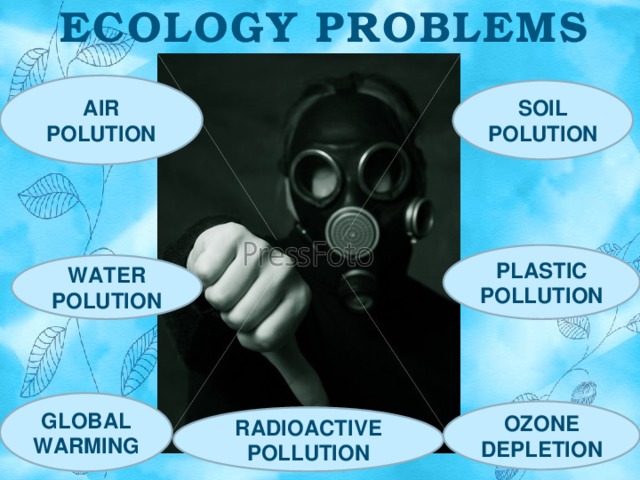
ECOLOGY PROBLEMS   AIR POLUTION SOIL POLUTION PLASTIC POLLUTION WATER POLUTION GLOBAL WARMING OZONE DEPLETION RADIOACTIVE POLLUTION

ECOLOGY PROBLEMS

AIR POLUTION

SOIL POLUTION

PLASTIC POLLUTION

WATER POLUTION

GLOBAL WARMING

OZONE DEPLETION

RADIOACTIVE POLLUTION

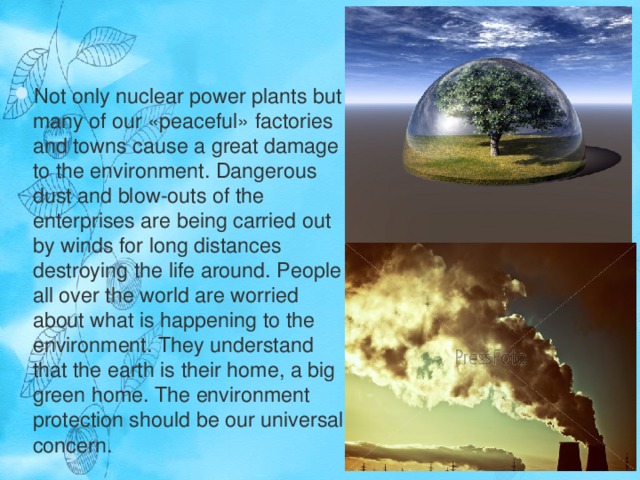
Not only nuclear power plants but many of our «peaceful» factories and towns cause a great damage to the environment. Dangerous dust and blow-outs of the enterprises are being carried out by winds for long distances destroying the life around. People all over the world are worried about what is happening to the environment. They understand that the earth is their home, a big green home. The environment protection should be our universal concern. 
  • Not only nuclear power plants but many of our «peaceful» factories and towns cause a great damage to the environment. Dangerous dust and blow-outs of the enterprises are being carried out by winds for long distances destroying the life around. People all over the world are worried about what is happening to the environment. They understand that the earth is their home, a big green home. The environment protection should be our universal concern. 
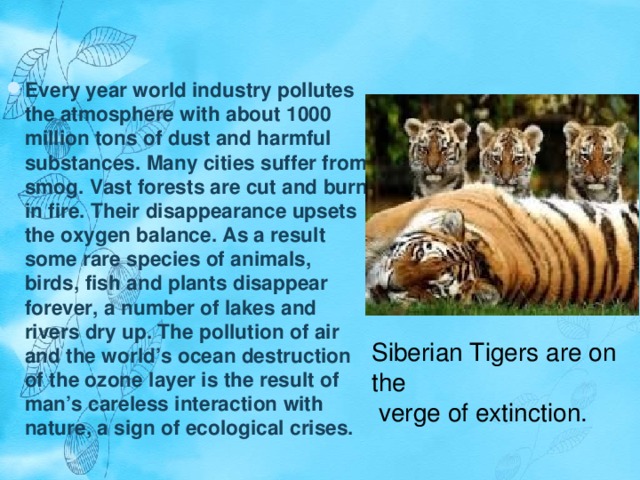
Every year world industry pollutes the atmosphere with about 1000 million tons of dust and harmful substances. Many cities suffer from smog. Vast forests are cut and burn in fire. Their disappearance upsets the oxygen balance. As a result some rare species of animals, birds, fish and plants disappear forever, a number of lakes and rivers dry up. The pollution of air and the world’s ocean destruction of the ozone layer is the result of man’s careless interaction with nature, a sign of ecological crises. Siberian Tigers are on the  verge of extinction.
  • Every year world industry pollutes the atmosphere with about 1000 million tons of dust and harmful substances. Many cities suffer from smog. Vast forests are cut and burn in fire. Their disappearance upsets the oxygen balance. As a result some rare species of animals, birds, fish and plants disappear forever, a number of lakes and rivers dry up. The pollution of air and the world’s ocean destruction of the ozone layer is the result of man’s careless interaction with nature, a sign of ecological crises.

Siberian Tigers are on the

verge of extinction.

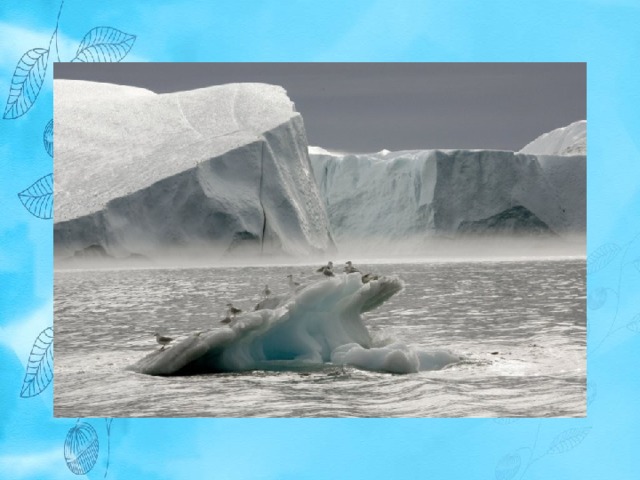
Global Warming   Global warming process of the gradual increase fair-annual temperature of the atmosphere of the Land and World ocean.     The Scientists were defined: uncontrolled surges in atmosphere and other thoughtless behaviour of the person was a reason of the steady change the climate, capable completely to change the planet. The Danger of the global catastrophe has acknowledged the government and folk of the developed countries of the world.

Global Warming


  • Global warming process of the gradual increase fair-annual temperature of the atmosphere of the Land and World ocean.
  •     The Scientists were defined: uncontrolled surges in atmosphere and other thoughtless behaviour of the person was a reason of the steady change the climate, capable completely to change the planet. The Danger of the global catastrophe has acknowledged the government and folk of the developed countries of the world.
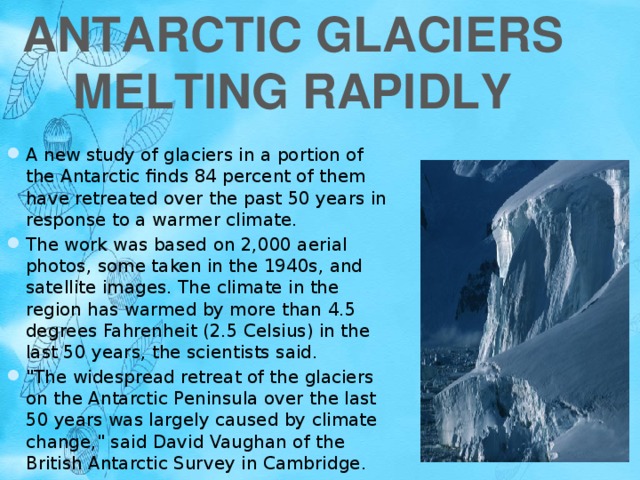
Antarctic Glaciers Melting Rapidly A new study of glaciers in a portion of the Antarctic finds 84 percent of them have retreated over the past 50 years in response to a warmer climate. The work was based on 2,000 aerial photos, some taken in the 1940s, and satellite images. The climate in the region has warmed by more than 4.5 degrees Fahrenheit (2.5 Celsius) in the last 50 years, the scientists said.

Antarctic Glaciers Melting Rapidly

  • A new study of glaciers in a portion of the Antarctic finds 84 percent of them have retreated over the past 50 years in response to a warmer climate.
  • The work was based on 2,000 aerial photos, some taken in the 1940s, and satellite images. The climate in the region has warmed by more than 4.5 degrees Fahrenheit (2.5 Celsius) in the last 50 years, the scientists said.
  • "The widespread retreat of the glaciers on the Antarctic Peninsula over the last 50 years was largely caused by climate change," said David Vaughan of the British Antarctic Survey in Cambridge.
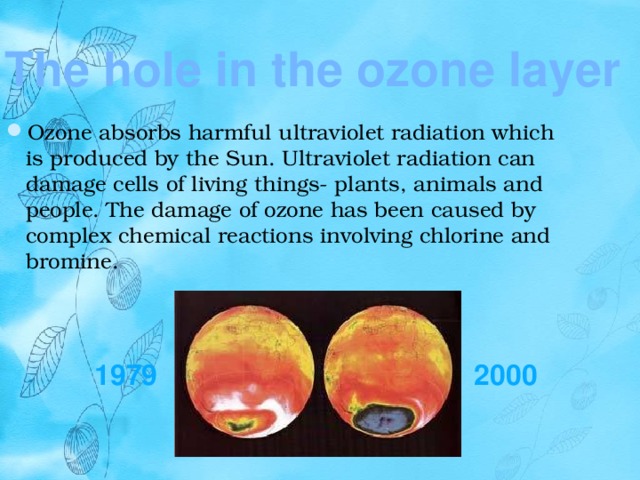
The hole in the ozone layer Ozone absorbs harmful ultraviolet radiation which is produced by the Sun. Ultraviolet radiation can damage cells of living things- plants, animals and people. The damage of ozone has been caused by complex chemical reactions involving chlorine and bromine. 1979 2000

The hole in the ozone layer

  • Ozone absorbs harmful ultraviolet radiation which is produced by the Sun. Ultraviolet radiation can damage cells of living things- plants, animals and people. The damage of ozone has been caused by complex chemical reactions involving chlorine and bromine.

1979

2000

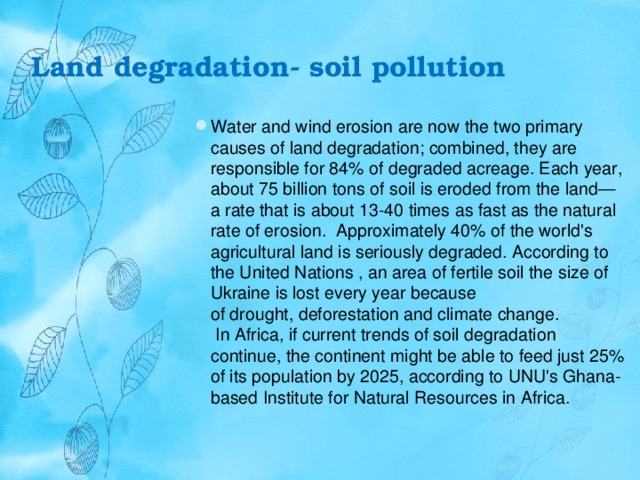
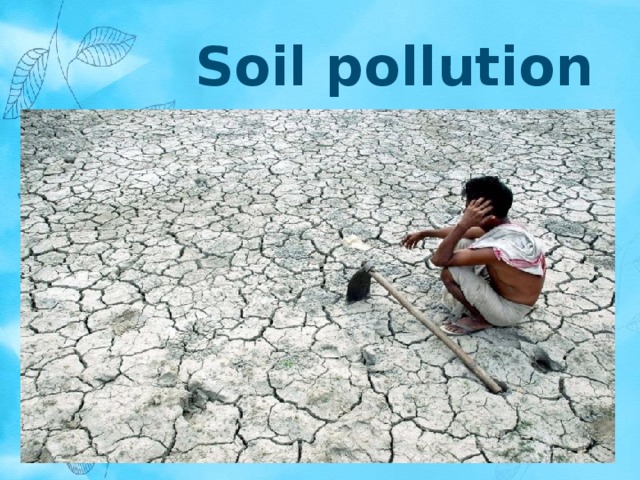
Land degradation- soil pollution   Water and wind erosion are now the two primary causes of land degradation; combined, they are responsible for 84% of degraded acreage. Each year, about 75 billion tons of soil is eroded from the land—a rate that is about 13-40 times as fast as the natural rate of erosion.  Approximately 40% of the world's agricultural land is seriously degraded. According to the United Nations , an area of fertile soil the size of Ukraine is lost every year because of drought, deforestation and climate change.  In Africa, if current trends of soil degradation continue, the continent might be able to feed just 25% of its population by 2025, according to UNU's Ghana-based Institute for Natural Resources in Africa.

Land degradation- soil pollution

  • Water and wind erosion are now the two primary causes of land degradation; combined, they are responsible for 84% of degraded acreage. Each year, about 75 billion tons of soil is eroded from the land—a rate that is about 13-40 times as fast as the natural rate of erosion.  Approximately 40% of the world's agricultural land is seriously degraded. According to the United Nations , an area of fertile soil the size of Ukraine is lost every year because of drought, deforestation and climate change.  In Africa, if current trends of soil degradation continue, the continent might be able to feed just 25% of its population by 2025, according to UNU's Ghana-based Institute for Natural Resources in Africa.
Soil pollution

Soil pollution

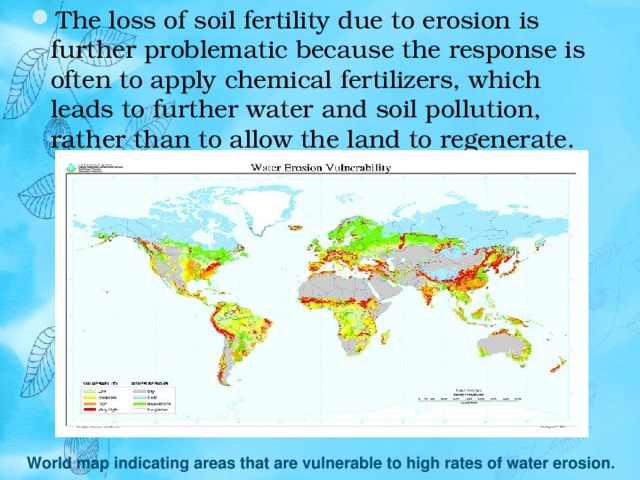
The loss of soil fertility due to erosion is further problematic because the response is often to apply chemical fertilizers, which leads to further water and soil pollution, rather than to allow the land to regenerate. World map indicating areas that are vulnerable to high rates of water erosion.
  • The loss of soil fertility due to erosion is further problematic because the response is often to apply chemical fertilizers, which leads to further water and soil pollution, rather than to allow the land to regenerate.

World map indicating areas that are vulnerable to high rates of water erosion.

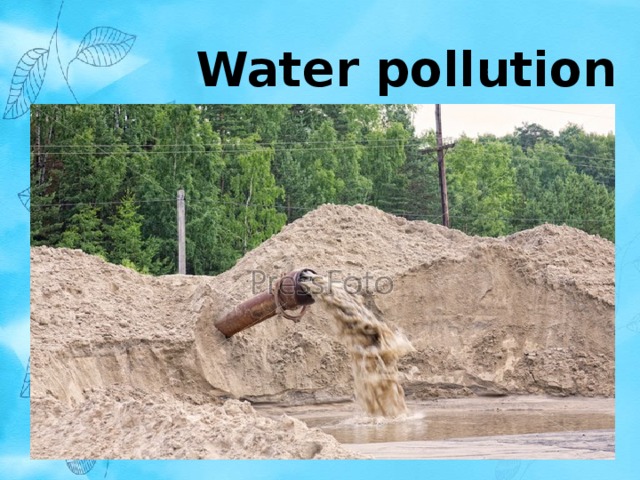
Water pollution

Water pollution

Approximate Decomposition Times in a Landfill Traffic ticket Banana peel 1 month Wool sock Up to 6 month Wood stakes 1 year Wax paper cup 4 years Painted wooden stake 5 years Tin cans 13 years Aluminium cans, plastic bottles 100 years Glass containers Up to 500 years never

Approximate Decomposition Times in a Landfill

Traffic ticket

Banana peel

1 month

Wool sock

Up to 6 month

Wood stakes

1 year

Wax paper cup

4 years

Painted wooden stake

5 years

Tin cans

13 years

Aluminium cans, plastic bottles

100 years

Glass containers

Up to 500 years

never

-80%
Курсы повышения квалификации

Психология межличностных отношений и общения

Продолжительность 144 часа
Документ: Удостоверение о повышении квалификации
6000 руб.
1200 руб.
Подробнее
Скачать разработку
Сохранить у себя:
Презентация по английскому языку "Ecology Problems" (1.84 MB)

Комментарии 0

Чтобы добавить комментарий зарегистрируйтесь или на сайт