
 Получите свидетельство
 Вход
Вход


Text 1. Прочитайте и переведите текст. Выполните задание.
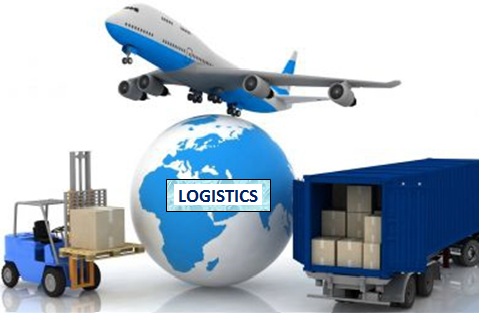
The meaning of logistics.
Market economy has brought a lot of new business terms into the Russian language. Logistics is one of them. The word ‘logistics’ dates from the ancient Greek logos – ‘ratio, word, calculation, reason’ and was used in ancient Greek, Roman and Byzantine empires to denote the military’s need to supply themselves with arms, ammunition and rations as they moved from their base to a forward position.
With increasing development of trade and economy, it started to be used in business too. Moving raw materials to manufacturers and then finished goods to customers used to be a simple job for men with strong backs and little education. Today more than ever before senior management of a firm is concerned about improving transportation management and logistics as transportation represents a major expense item and freight transportation accounts for about 6 per cent of gross domestic product of a country.
The goal of transportation is to ensure that all raw materials arrive at the factory at the proper time and in good condition. To achieve that it is necessary to focus on improvements of operations that lead to a better service at the lowest cost. Transportation managers are also involved in many other operations. They assist marketing by quoting freight rates for salespeople, suggesting quantity discounts that can be based on transportation savings and selecting carriers and routes for reliable delivery of products.
The meaning of logistics is expanding. Now we speak about inbound, internal, outbound logistics, transport logistics, strategic logistics, warehousing logistics, integrated logistics etc. According to the Council of Logistics Management, now one of the world’s prominent organizations for logistics professionals, ‘logistics is that part of the supply chain process that plans, implements and controls the efficient, effective forward and reverse flow and storage of goods, services and related information between the point of origin and the point of consumption in order to meet customers’ requirements’. As transport logistics is a major factor in the supply chain process, specialists pay much attention to modes of transport, transport companies’ operations as well as to some other activities related to customs clearance, warehousing and safe delivery of goods to final destinations.
Задание. Найти в тексте следующие слова и выражения на английском языке:
деловые отношения, 2) развитие торговли, 3) потребители, 4) (доставить товар) вовремя и в хорошем состоянии, 5) вести к, 6) лучшее обслуживание, 7) при низких затратах, 8) быть вовлеченным в, 9) экономия на транспорте, 10) надежная доставка продукции, 11) планировать, снабжать и контролировать, 12) хранение товара, 13) отвечать требованиям заказчика, 14) уделять внимание, 15) место назначения.
Text 2. Прочитайте текст. Выполните задание.
Logistics as a science
Logistics - the science, the object of which is to organize the management of the process of movement of goods and services from suppliers of raw materials to consumers. Logistics contains the functioning of the circulation of products, goods, services, inventory management and provisions, creating a goods movement infrastructure.
A broader definition of logistics treats it as the study of planning, management and control of material movement, information and financial resources in different systems.

From the perspective of the organization's management logistics can be considered as the strategic management of material flows in the supply: procurement, transportation, sale and storage of materials, parts and finished inventory. The concept also includes the management of relevant information flows and financial flows. Logistics is aimed at optimizing costs and streamlining the production process, marketing and auxiliary services, both within a single enterprise or a group of enterprises.
The content of logistics as a science is to establish causal relationships and regularities inherent in the movement of goods, in order to identify and put into practice effective forms of organization and material and information flow management.
The main objects of study are in logistics:
logistics operations
logistics chain
logistics system
logistics functions
material flows
information flows
logistics costs
Задание. Найдите в тексте английские эквиваленты следующих предложений:
Логистика включает в себя функционирование сферы обращения продукции, товаров, услуг, управление товарными запасами и провиантом, создание инфраструктуры товародвижения.
С позиции менеджмента организации логистику можно рассматривать как стратегическое управление материальными потоками в процессе снабжения: закупки, перевозки, продажи и хранения материалов, деталей и готового инвентаря (техники и прочего).
Логистика направлена на оптимизацию издержек и рационализацию процесса производства, сбыта и сопутствующего сервиса как в рамках одного предприятия, так и для группы предприятий.
Text 3. Прочитайте и переведите текст. Выполните задание.
Logistics
Logistics is generally the detailed organization and implementation of a complex operation. In a general business sense, logistics is the management of the flow of things between the point of origin and the point of consumption in order to meet requirements of customers or corporations. The resources managed in logistics can include physical items, such as food, materials, animals, equipment and liquids, as well as abstract items, such as time and information. The logistics of physical items usually involves the integration of information flow, material handling, production, packaging, inventory, transportation, warehousing, and often security.
Весь материал - в документе.







 Сборник текстов с заданиями (0.2 MB)
 0
0 2388
2388 97
97 Нравится
0
Нравится
0


