
 Получите свидетельство
 Вход
Вход



Английский язык, 8 класс,
Юлия Михайловна
Lesson
You will get new information about different types of holidays and learn some new words.


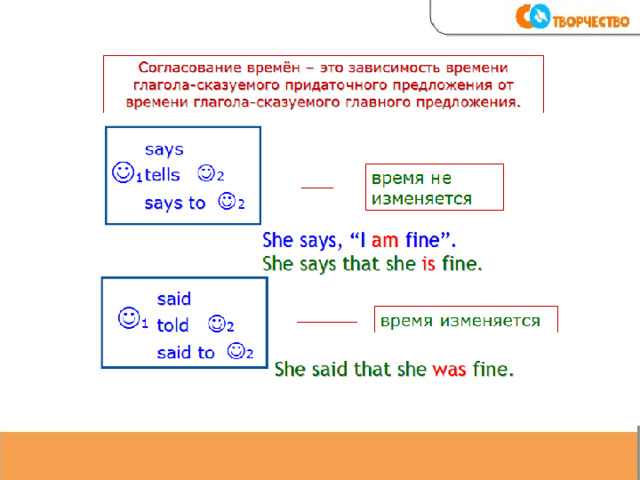
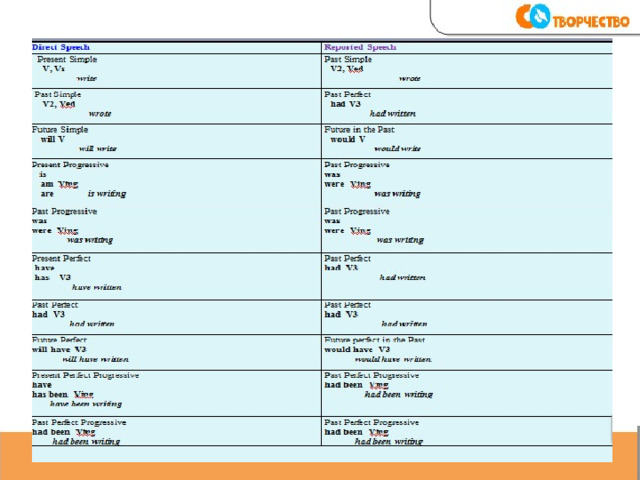
При этом при переводе прямой речи в косвенную местоимения изменяются согласно требованиям логики.
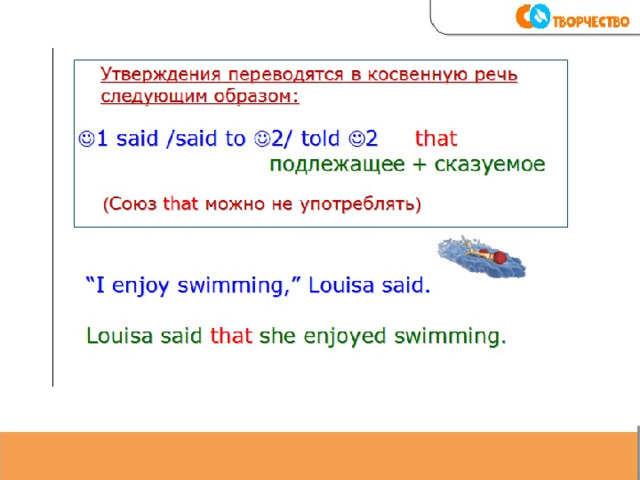
He tells them. “I can help you.”
He tells them that he can help them.
I
he, she, I (редко)
we
they, we (редко)
you
he, she, they
При этом при переводе прямой речи в косвенную местоимения изменяются согласно требованиям логики.
He tells them. “I can help you.”
He tells them that he can help them.
I
he, she, I (редко)
we
they, we (редко)
you
he, she, they




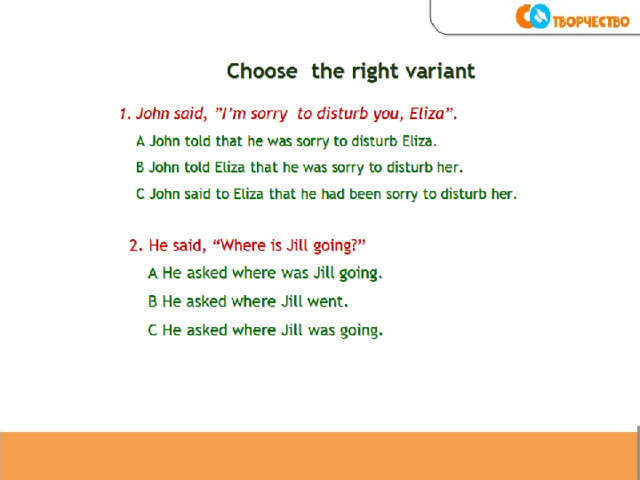


Choose
1. Tom said he (had read/read/has read) the book already.
2. David said he (is planning/was planning/ will plan) to start a new business.
3. They said that they had enjoyed the film the week (ago/before/later) .
4. James said he (saw/had seen/ has seen) the play twice.
5. She said that she (was feeling/is feeling/feels) tired after a long day at work.
6. Mark said he (will work/has worked/would work) on the project all night.
7. Steve said he (is going/will go/was going) to the gym after work.
8. Daniel said he (couldn`t/ can`t/ is able to) find his phone anywhere.
9. William (suggested/said that/suggests) fixing my computer.
10. Andrew (told/said/said us) he had cooked dinner already.


Should
Have to
Must
Need
Can`t
Could
Don`t have to





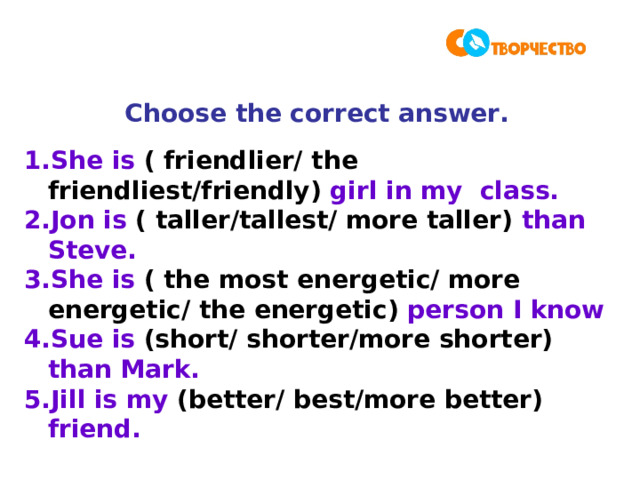
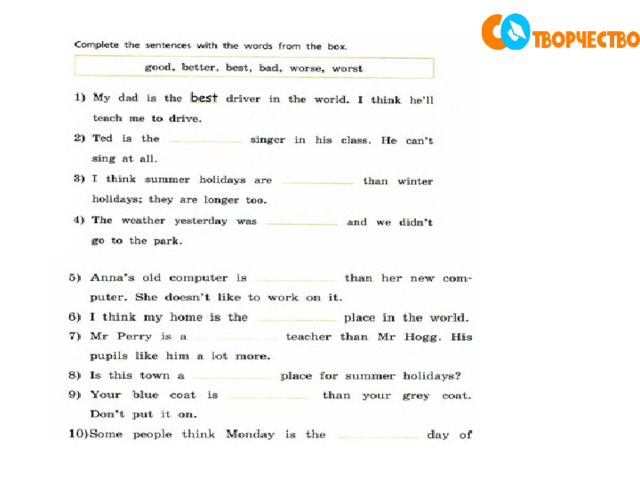
Choose the correct answer.
- She is ( friendlier/ the friendliest/friendly) girl in my class.
- Jon is ( taller/tallest/ more taller) than Steve.
- She is ( the most energetic/ more energetic/ the energetic) person I know
- Sue is (short/ shorter/more shorter) than Mark.
- Jill is my (better/ best/more better) friend.



 Грамматический тренажер (10.61 MB)
 0
0 158
158 5
5 Нравится
0
Нравится
0


