Получите свидетельство
 Вход
Вход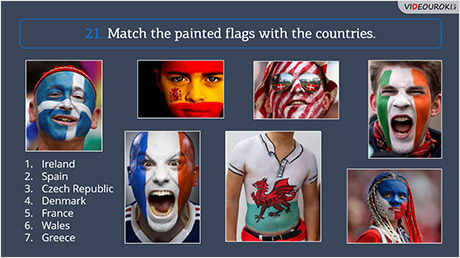



Hello! Welcome to Europe!
We come from different countries and speak different languages but this continent is the home we share.
Europe is a beautiful continent with a fascinating history. It has produced many of the world’s famous scientists, inventors, artists and composers, as well as popular entertainers and successful sportspeople.
Come with us and let’s explore Europe together!
You will test your knowledge to see how much you know about this continent and it will be an adventurous journey at the same time.
Ready! Then let’s begin!
1.
What sort of climate does Europe mainly have?
- Tropical
-Subtropical
- Temperate.
Most Europe has a “temperate” climate – neither too hot nor too cold.
2.
Which of the Greek terms means “government by the people”?
- democracy
- communism
- imperialism
In Greece around 500 BC, the city of Athens introduced “democracy” - instead of having a king, the men of Athens took decisions by voting.
3.
When the Roman Empire collapsed, different parts of Europe were taken over by different people.
Join the tribes and the areas where they settled.
The Angles and Saxons moved to England and ruled until 1066.
Before Roman times, Celtic peoples lived in many parts of Europe. Their descendants today live mainly in Brittany (France), Cornwall (England), Galicia (Spain), Ireland, Scotland and Wales.
The Franks conquered a large part of Europe, including France.
The Goths set up in Spain and Italy.
The Vikings lived in Scandinavia.
The Slavs settled in eastern Europe (Belarusians, Bulgarians, Czechs, Poles, Serbs, Slovaks, Slovenes, Russians and Ukrainians.)
The Magyars founded the Kingdom of Hungary in the year 1000.
4.
This period gave the world:

- one of the world’s most famous statues: David by Michelangelo;
- Venus by Botticelli;
- the amazing inventor and artist Leonardo da Vinci;
- scientists such as Copernicus and Galileo (who discovered that the Earth and other planets move around the sun).
How do we call this period of “rebirth”?
This period is called The Renaissance.
During the Middle ages, most people could not read and write and they knew only what they learnt in church. But in the 1300s and 1400s, students began rediscovering the ancient books of Greeks and Romans. It was as if a lost world of beauty and wisdom had been reborn.
5.
Which material, used to power steam engines, made the Industrial Revolution possible?
a) cotton
b) Clay
c) Coal
The Industrial Revolution started with an energy crisis. Parts of Europe were running out of forest. There were a lot of coal in Europe and miners began digging for it.
6.
The European Union was set up in 1951 by Germany, France, Luxemburg, Belgium and Netherlands. How many countries are the part of the European Union now?

- 16
- 20
- 28
The European Union includes 28 countries.
7.
Nowadays one single currency, the euro, is used in many EU countries. One side of euro coins is the same in all countries. What is on the other side?
- The Queen of England;
- A design representing the country in which it was made;
- Beethoven.
On the other side there is a design representing the country in which it was made.
8.
What country was the letter sent to?

- Germany
- Spain
- Denmark
The letter was sent to Madrid. Madrid is the capital of Spain.
9.
Where is the highest bridge in the world?
- In France
- In Sweden
- Italy
The highest bridge in the world (246 metres tall) is the Millau Viaduct in France, which was opened in 2004.
10.
Do you know which country the Dalmatian dog comes from?
- Norway
- Croatia
- Latvia
The first illustrations of the dog have been found in Croatia.
11.
What is the biggest lake in Europe?
- Lake Balaton in Hungary (600 sq km)
- Lake Lagoda in Russia (17,700 sq km)
- Lake Saimaa in Finland (1,147 sq km)
The largest lake in Europe is Lake Lagoda. It is located in north-western Russia and is the 14th largest lake in the world.
12.
Which two countries does the Channel Tunnel connect?
- Denmark and Sweden
- The UK and France
- Norway and Finland
The longest railway tunnel (50 km) is the Channel Tunnel. It carries Eurostar high-speed trains under the sea between Calais in France and Folkestone in England.
13.
When you cross the borders between most EU countries, you no longer need …
Solve the rebus puzzle and find out the word.

You don’t need your passport anymore.
14.
What country is this hot air balloon from?
- England
- Germany
- Sweden
No doubt, it is from Germany.
.de is the domain name for Germany in the Internet.
15.
In which country were all these great people born?
Nicolaus Copernicus - an astronomer, mathematician, physician, translator, economist and governor.
Marie Curie won the Nobel Prize for two different scientific disciplines and taught at the University of Paris.
Chopin died before the age of 40, but he composed hundreds of pieces during his short life.
- Lithuania
- Latvia
- Poland
Poland is famous for being the home to all these people.
16.
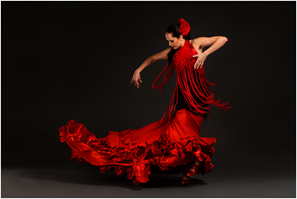
In which country would you find this kind of dancing?
- Slovenia
- Spain
- Denmark
Flamenco is a traditional Spanish dance that requires both poise and elegance.
17.
Where might you see this cheese market?
- the Netherlands (Holland)
- Cyprus
- Czech Republic
The cheese markets in Holland are the colourful, folkloric shows where you can see how the cheese was traded, with the traditional cheese carriers in traditional clothes.
18.
Can you guess in which country this picture was taken?
- The UK
- Portugal
- Poland
It was taken in Portugal. The capital of Portugal is Lisbon or Lisboa in Portuguese.
19.
Where might you find these clothes?

- Austria
- Finland
- Bulgaria
You might find them in Finland, of course. Helsinki is the capital of Finland.
20.
In which country could you find this ancient monument?
- Poland
- Italy
- Luxembourg
This is the Colosseum. You can see it in Italy.
21.
Match the painted flags with the countries.
1. Ireland
2. Spain
3. Czech Republic
4. Denmark
5. France
6. Wales
7. Greece
22.
Which of these countries is not situated in Europe: Russia, Poland, Egypt, Moldova, Crete, Belgium?
Correct answer is Egypt. It is situated in Africa.
23.
Where does this bagpiper come from?
- Belarus
- Scotland
- Slovakia
Bagpipes are most commonly associated with Scotland.
24.
Can you guess in which country this picture was taken?
- Ireland
- Sweden
- Estonia
This picture was taken in Ireland. You can see the name of its capital, Dublin, on one of the pointers.
25.
Where does this alphabet originate from?
- from Italy
- from Greece
- from Portugal
The following clues may help you: olives, walnuts, columns, Olympic games.
This alphabet was invented by Greeks.
26.
Who is this? Solve the rebus puzzle and find out his name.
Correct answer is – Homer – ancient poet, the author of “The Iliad” and “The Odyssey” epics.
27.
What small country is one of the most visited places in Europe?
Follow the arrows and you’ll find out its name.
So, here we have Liechtenstein.
Well, our journey around Europe is over. Explore Europe and other continents further!
 0
0 1157
1157