The Ministry of Knowledge and science of the Republic of Kazakhstan
South Kazakhstan region
Town of Kentau
The general secondary school named after Makhmud Kashgary

On theme :

6 – “ A ” form
The teacher : F. Satibaldieva
The theme of the lesson : “Invitation ”
The procedure of the lesson:
I. The beginning of the lesson a. Greeting pupils. b.Psychological preparing of pupils for the lesson. c. To talk about the weather and seasons.
d. To review the new words and write these words
under each symbol . e. To work with various types of cards f. T o divide verbs into regular and irregular
verbs and write past form. g. To talk about difference and similarity
between Kazakhstan`s and England`s weather
after the Venn diagram.
h. Riddle.
i. Proverb:” Everything is good in it’sseason”. j.To sing a song : “ About the weather”.
To complete the last lesson
II.The main part of the lesson. a.To explain the new words.
b.To make up sentences. c. Physical minute.
d. To teach how to write an invitation.
e. To listen to the dialogue over the computer.
f. To read and translate the dialogue.
g. To do an oral exercise.
h. To do written exercise.
III The end of the lesson.
To finish the new lesson.
Marking.
Giving homework: to write about your friend`s birthday party.

Educational:
a) to explain the new words;
b) to read and translate the
dialogue; c) to do oral and written exercises.
The type:
mixed.
The aim of the lesson
The method:
an interactive.
Developing : To enrich pupils` vocabulary stock, to develop their skills and habits of speaking, listening, writing and reading and their abilities of independent thinking.
The equipment: pictures, tables, cards, a computer, a multi projector, magnet board, text book
Bringing-up:
To teach pupils to be friendly and respect each other, to motivate pupils` interest in learning English.
The slogan:
Knowledge is power.
The theme: Invitation.
The educational aim: a)to explain the new words.
b)to read and translate the dialogue.
c) to do oral and written exercises.
The developing aim: to enrich pupils` vocabulary stock, to develop their skills
and habits of speaking, listening, writing and reading
and their abilities of independent thinking.
The aim of up-bringing: to teach pupils to be friendly and respect each other,
to motivate pupils` interest in learning English.
The type of the lesson: mixed.
The method of the lesson: an interactive.
The equipment: pictures, tables, cards, a computer, a multi projector, magnet board,
text book
The procedure of the lesson:
I. The beginning of the lesson
a. Greeting pupils.
b. Psychological preparing of pupils for the lesson:

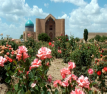

-You are so merry as this sun!
-You are so beautiful as these flowers!
-You are as happy and clever as this girl!
c. To talk about the weather and seasons.
d. To review the new words and write these words under each symbol
Қуёшли, ёмғирли, қорли, шамолли, булутли.




e.To work with various types of cards
Say comparatives and superlatives
good-
important –
tall-
beautiful-
Choose the correct form
Мен Махмуд Қoшғарий мактабининг уқувчисиман.
I study at Makhmud Kashgary school.
I work at Makhmud Kashgary school.
I am a pupil of Makhmud Kashgary school.
Answer the questions
What is your Motherland?
Who is the president of Kazakhstan?
f. T o divide verbs into regular and irregular verbs and write past form.
Rain, start, go, travel, take, arrive, come, leave.
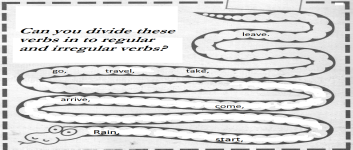

Regular verbs


Irregular verbs
g.To talk about difference and similarity between Kazakhstan’s and England’s weather after the Venn
diagram.



The weather in Kazakhstan.
The weather is cold in winter in Kazakhstan. . Usually it snows. You can see snow everywhere. The weather is fine in spring. It is warm. Sometimes it rains. It is hot in summer.The weather is fine. The sun shines brightly. It is cool in autumn. The weather is changeable. It often rains.
The weather in England.
Winter is not very cold in England. There is little snow and much rain in England .But there are many fine days in winter ,when the sun shines. Spring is the first warm season. Trees and grass are green. The sun is warm, the sky is blue. Summer is the warmest season. There are some hot days in summer .But cool winds often blow from the sea, so the English summer is not always hot. There are many sunny days in summer. It is cool in autumn. The sky is grey, the cold wind blows. In autumn the leaves on the trees change their colour from green to yellow, brown and red.
h. Riddle:
The little old woman has twelve children: some short, some long, some cold, some hot. Who is she?
i. Proverb:” Everything is good in it’s season”.
j. To sing a song : About the weather.
Song: About the weather.
Sunny, sunny, sunny, sunny,
It is sunny in the sky
S-U-N-N-Y, sunny,
It is sunny in the sky.
Cloudy, cloudy, cloudy, cloudy,
It is cloudy in the sky.
C-L-O-U-D-Y ,cloudy,
It is cloudy in the sky.
Rainy, rainy, rainy, rainy,
It is rainy in the sky.
R-A-I-N-Y, rainy,
It is rainy in the sky.
Windy, windy, windy, windy,
It is windy in the sky.
Snowy, snowy, snowy, snowy,
It is snowy in the sky.
S-N-O-W-Y, snowy,
It is snowy in the sky.
To complete the last lesson
II. The main part of the lesson.
The new lesson: Unit 6. Step1.Invitation.
a)To explain the new words:
| an invitation | [inviteiʃən] | таклифнома |
| disgusting | [disg`Λstiŋ] | жуда ёмон |
| delicious | [diliʃəs] | жуда ширин |
| a postcard | [pəustkα:d] | Откритка |
| lovely | [`lΛvli] | ёқимли,гузал |
| boring | [`b :riŋ] :riŋ] | зерикаpли |
b)To make up sentences
I send a postcard to my friend.
Ice-cream is delicious.
Today the weather is lovely.
This book isn’t boring, it’s interesting.
c) Physical minute
Stand up and look around
Shake your head and turn around.
Stamp your feet upon the ground.
Clap your hands and then sit down.
Stand up and look around.
Make a bow and turn around.
Stamp your feet upon the ground
Clap your hands and then sit down.
d)To teach pupils how to write an invitation.
Pupils will write their own invitations.
e) To listen to the dialogue over the computer.
Carol: Were you at John’s party?
Dimitry: Yes, I was.
Carol: Was it good?
Dimitry: No, it was boring. The food was disgusting.
Carol: Were there many people?
Dimitry: Yes? There were. And where were you?
Carol: I was at Tom`s party. There were not many people there. But was lovely. The food was delicious. I enjoyed
it.
f) To read and translate the dialogue.
g) To do an oral exercise. Are the sentences true (T)of false (F) according the dialogue?
b. The party was boring.
a. Dimitry was at John`s party yesterday.
d. There were many people.
c. The food was delicious.
e. Carol was at John`s party too.
g. Carol enjoyed the party.
True False
____________ ____________
____________ ____________
____________ ____________
____________ ____________
h)To do written exercise.
There are some words in the magic box. Put the words in to their place and make up sentences.
party a yesterday was Sevara at.
was good It.
food delicious was The.
not were There people many.
the She party enjoyed.
III. The end of the lesson
To finish the new lesson.
To use the proverb: "Knowledge is power".
Knowledge is an important thing in our life. Good knowledge of school subjects will help you later to choose your way in life. You learn many things at your lessons. And you also get new information from books, magazines, radio and TV programmers.
Knowledge helps us to make our work more effective, more useful.
b)Marking pupils. c)Giving homework: to write about your friend's birthday party.

 Получите свидетельство
 Вход
Вход





 Разработка по английскому языку "Invitation” (1.66 MB)
 0
0 734
734 43
43 Нравится
0
Нравится
0


