Меню
Разработки
Разработки  /  Русский язык  /  Уроки  /  6 класс  /  "Разные страны - разные вкусы"

"Разные страны - разные вкусы"

Урок для учащихся 6 класса по УМК М. З. Биболетовой. Т: "Разные страны - разные вкусы" знакомит учащихся с традиционной едой некоторых стран. К разработке прилагаются презентация и тесты для групповой работы.

08.12.2016

Содержимое разработки

ЛИСТ САМООЦЕНКИ

  1. Я активно высказываю своё мнение.

Да нет

  1. Я внимательно выслушиваю мнения своих товарищей.

Да нет

  1. Я активно участвую в работе группы.

Да нет

  1. Я придерживаюсь графика работ.

Да нет


ЛИСТ САМООЦЕНКИ

  1. Я активно высказываю своё мнение.

Да нет

  1. Я внимательно выслушиваю мнения своих товарищей.

Да нет

  1. Я активно участвую в работе группы.

Да нет

  1. Я придерживаюсь графика работ.

Да нет


ЛИСТ САМООЦЕНКИ

  1. Я активно высказываю своё мнение.

Да нет

  1. Я внимательно выслушиваю мнения своих товарищей.

Да нет

  1. Я активно участвую в работе группы.

Да нет

  1. Я придерживаюсь графика работ.

Да нет


Контрольный лист оценки совместной деятельности

Впишите имена участников группы.

---------------------- предлагает идеи.

------------------------ решает сложные задачи.

------------------------ задаёт вопросы

----------------------- оформляет задание

----------------------- предлагает свою помощь

----------------------- вовлекает других членов группы в работу

----------------------- высказывает свою точку зрения


Контрольный лист оценки совместной деятельности

Впишите имена участников группы.

---------------------- предлагает идеи.

------------------------ решает сложные задачи.

------------------------ задаёт вопросы

----------------------- оформляет задание

----------------------- предлагает свою помощь

----------------------- вовлекает других членов группы в работу

----------------------- высказывает свою точку зрения


Содержимое разработки

Meals in Britain .


The English usually have 4 meals a day: breakfast, lunch, tea (5 o'clock), and dinner. Breakfast can be a full "English breakfast" of corn flakes with milk and sugar, or bacon and eggs, toast and marmalade, tea or coffee. Some people, however, have just a cup of tea or coffee with a toast.


At midday everything is stopped for lunch.

Usually they like steak, roast beef, Yorkshire pudding, and fish and chips.


Afternoon tea is taken at about 5 o'clock, but it can hardly be called a meal. It is a cup of tea and a cake or biscuits. At the weekends afternoon tea is a special occasion.


Friends and visitors are often invited to have a chat over a cup of tea.


The main meal is dinner. It is usually eaten at 7 o'clock.


The first course may be soup (though the English don't like it very much).


The main course will often be fish or meat, perhaps the traditional roast beef of old England, and a lot of vegetables.


The, next course will be something sweet and often baked, such as a fruit pie. Last of all there may be cheese, often with biscuits.


It is common knowledge that the English are very fond of tea. They like to have "a nice cup of tea" 6 or 8 times a day, sometimes even more.


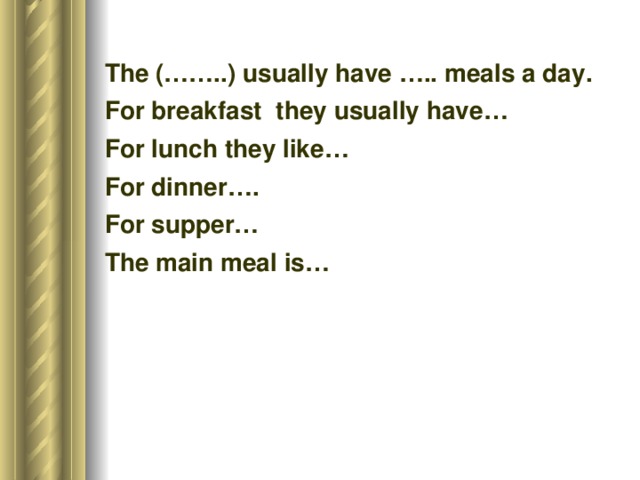
The (……..) usually have ….. meals a day.

For breakfast they usually have…


For lunch they like…


For dinner….


For supper…


The main meal is…



Americans eat a lot.


They have three meals a day: breakfast, lunch and dinner.


Most of Americans don't eat home but prefer to go to restaurants. They can choose from many kind of restaurants. There is a great number of ethnic restaurants in the United States. Italian, Chinese and Mexican food is very popular. An American institution is the fast food restaurant, which is very convenient but not very healthy.


However there are some principles of American cuisine (if we may call it so). Americans drink a lot of juices and soda, eat a lot of meat, fruits and vegetables, not much bread. In the morning Americans have cereal or scrambled eggs, milk or orange juice.


Chicken or fish, fried potatoes, vegetable salads, and desert: this is the most common menu for lunch. Dinner is probably the most important meal of the day, some people have family dinner, when all members of family have to be there.


For dinner Americans usually have meat, fried or baked potatoes with ketchup or sour cream, corn, peas, sometimes macaroni and cheese or spaghetti; ice-cream, fruit or cake may be for dessert.


The (…….. )usually have ….. meals a day.

For breakfast they usually have…


For lunch they like…


For dinner….


For supper…


The main meal is…


Russian Food


I usually have two or three meals a day on weekdays and four meals on my day off. I don’t often have an opportunity to have a dinner when I’m at school. My meals are: breakfast, lunch, dinner and supper or tea.


Some of my friends have a snack rather than a meal in the morning. But my breakfast is a full meal and I have it at 7 o’clock. It is usually bacon and eggs. Afterwards come sandwiches with butter and cheese or sausages, or sometimes jam. Then I drink tea or coffee.


I have lunch at about 12 o’clock. It starts with fruit juice. Then I have a vegetable salad and sandwiches again or pies with tea.


Dinner is at three or four o’clock. For dinner I have soup or borsch for starter, and meat or fish with a lot of vegetables for main course. For dessert I often have stewed fruit or jelly.


And at last supper. It is at seven or eight. My mother usually cooks fried fish and mashed potatoes, beefsteak and omelette. And salads, of course. Then I prefer a glass of warm milk with biscuits. Sometimes before going to bed I drink orange juice or eat an apple.


The (…….. ) usually have ….. meals a day.

For breakfast they usually have…


For lunch they like…


For dinner….


For supper…


The main meal is…


Meals in Italy


Italy is a European country rich in history with diverse cultures and languages. Italian food, such as pizza and spaghetti, is loved by millions of people worldwide.

To answer the question what do Italians eat it is best to list all the individual meals eaten in a typical day.

Breakfast

Italians do not eat bacon, eggs, toast or pancakes for breakfast. Italians typically eat a croissant or some yoghurt for breakfast with a cup of coffee or a cappuccino.

Lunch

Lunch is the biggest meal of the day for Italians and they literally keep on eating for hours! Italians often take three hour lunch breaks. Pizzas are a common meal at lunch. Italian pizzas are very thin and have limited toppings. Italians nearly always eat vegetarian pizzas. Bread without butter and salads are also very common at lunch. Pastas are also common at lunchtime and the pasta is usually full of vegetables.

Dinner

Italians always eat a lighter meal at dinner than at lunch. Vegetables are eaten every single night and are often accompanied by pasta. Meat is rarely eaten, and fish is much more common than red meat. Cheeses and nuts are usually served before and after dinner is eaten.

Dessert

Fresh fruit is usually the common choice for dessert. Gelato (Italian ice cream) is sometimes eaten as a treat for dessert.

For their last meal of the day, they have a lighter meal – like what we would consider lunch. It might even be just a large salad. They do not eat their last meal early in the evening like we do, but rather later between 8PM and 10PM.


The (…….. ) usually have ….. meals a day.

For breakfast they usually have…


For lunch they like…


For dinner….


For supper…


The main meal is…


French Food

The French have very many delicacies that they love to eat as well as the drinks that they take them with..

Breakfast is light. Tea or coffee, bread or toasts with butter or marmalade, sometimes instead of croissant or a chocolate. Orange juice. For children: cereals with milk.


Here is a typical example of a French lunch. For example, they can have up to five courses at lunch. This will include fish or some meat, salad, vegetables, desserts, wine, bread and cheeses. Restaurants will typically serve a four course meal instead of a five course meal.


The main course of a French dinner typically includes either meat or fish, served with side dishes of salads, rice, or pasta, French onion soup, cheese soufflé.


Supper in France is a very important meal which is also a prolonged process such as lunch. The main dishes of the French are as follows:

Roasted turkey

Chicken and Mushrooms Crepes

French roasted Chicken with Cabbage

Smoked Salmon and Dill Crepes

Popular French desserts include chocolate profiteroles, chocolate mousse, and apple tart


The (…….. ) usually have ….. meals a day.

For breakfast they usually have…


For lunch they like…


For dinner….


For supper…


The main meal is…


Содержимое разработки

Урок английского языка в 6 классе по УМК Биболетовой М. З.

Автор: Троицкая Т. Г.

Тема урока: Different Countries – Different Tastes.

Тип урока: Урок актуализации и систематизации знаний, закрепление знаний и способов деятельности.

Цели:
Создать условия для актуализации изученной тематической лексики в устной речи учащихся в процессе развития иноязычной коммуникативной компетенции.
Формировать универсальные учебные действия:

  • Личностные: умения сохранять учебно-познавательный интерес к новому учебному материалу, способам его усвоения, способность к самооценке, принятие ценности окружающего мира.

  • Регулятивные: умения ставить цель, принимать учебную задачу, планировать деятельность, оценивать результат и осуществлять рефлексию своей деятельности.

  • Познавательные: систематизировать, сопоставлять, анализировать, обобщать и интерпретировать информацию, содержащуюся в готовых информационных объектах;

  • Коммуникативные: планировать учебное сотрудничество, договариваться и приходить к общему решению в совместной деятельности, публично выступать.

Планируемый результат:

Предметные результаты:

- знают общеупотребительную лексику по т."Еда"

- находят информацию в тексте и систематизируют её;

- строят высказывания в рамках темы с использованием изученной лексики

Метапредметные результаты:

Регулятивные:

- принимать и сохранять учебную задачу; (саморегуляция)

- планировать своё действие в группе в соответствии с поставленной задачей; (планирование)

- выполнять учебное действие, в соответствии с учебной задачей, выражать свою позицию (контроль и оценка)

Коммникативные:

- точно излагать полученную информацию, отвечать на вопросы, участвовать в диалоге, в полилоге;

Познавательные:

учащиеся усовершенствуют умения:

- строить логичное рассуждение.

Личностные результаты:

- учебно-познавательный интерес к новому учебному материалу и способам решения новой частной задачи.

Тип урока: актуализация новых знаний;

Используемые технологии: элементы технологии проектной деятельности, технологии сотрудничества, ИКТ - технологии, активных методов обучения.


Ход урока.


Этап урока

Деятельность учителя

Деятельность учащихся

Планируемые результаты

Проблематизация, актуализация, мотивация


6 мин.

Задача: создать устойчивую учебно-познавательную мотивацию деятельности


    1. 1.1.Организационный момент. Приветствие учителя.

Hello, students. How are you? I’m glad to see you. Sit down, please.


The motto of our lesson: we see, hear, speak, do and all will be OK! All together! (Девизом нашего урока будет: вижу (прикасаюсь к глазам), слышу (прикасаюсь к ушам), говорю (прикоснуться к губам), делаю ( хлопнуть в ладоши), получится (большой палец вверх)!

Надеюсь, что наш урок пройдет так же энергично и с таким же хорошим настроением.


1.2 Мотивация учащихся.

Look at the crossword. Can you name the main word?

Предлагает детям кроссворд и просит назвать главное слово. (Tastes differ) (слайд 2)


1.3 Определение темы (под руководством учителя)

-Look at the crossword once more. How do you think what we’ll speak today about?

Предлагает ещё раз взглянуть на кроссворд и назвать тему урока. (слайд 3)


Can we say that every country has its own traditional meal and its own tastes?

Можем ли мы сказать, что у каждой страны есть своя традиционная еда и свои собственные вкусы?

Can you help me to name the theme of our lesson? Complete the sentence: Different countries - different...

Помогите мне сформулировать тему нашего урока: Разные страны - разные (вкусы)

1.4 Целеполагание.

Let's imagine, that in December the members of the International Explorers' Club will come to our school. They are from different countries and they have different tastes. Do you know what food do they like? Would you like to know it?

Давайте представим, что в декабре члены международного исследовательского клуба собираются приехать в нашу школу. Они из разных стран и у них разные вкусы. Вы знаете, какую еду они любят? А вы хотите это узнать?

А теперь давайте подумаем, какова цель нашего урока?


Приветствуют учителя.


Проговаривают и выполняют действия вслед за учителем.


Разгадывают кроссворд. Высказывают предположения. Называют ключевое слово.


Высказывают предположения: "Это значит, что у всех людей разные вкусы"; " У каждого человека есть своя любимая еда".


Дети соглашаются.


Дети называют тему урока.


Принимают

учебную задачу.


Формулируют цели урока.


Эмоциональный настрой


Формируется устойчивая учебно – познавательная мотивация.


ПУУД

Формируется устойчивая учебно – познавательная мотивация деятельности.


РУУД

Совершенствуется действие целеполагания.


Актуализация знаний.

10 МИН.

Задача: Оценить уровень усвоения материала, коррекция усвоения темы


Закрепление учебного материала.

Задача: Выявление качества и уровня овладения знаниями, умениями, навыками


Физминутка

1. Look at the crosswords. Try to guess it and name the key word.

Просит отгадать кроссворд и назвать ключевое слово (breakfast)


2. Давайте посмотрим на слайд и вспомним, на какие 2 группы делятся имена существительные в английском языке? (слайд 4)

А теперь назовите мне продукты из кроссворда, используя определяющие слова much", "many", "a few", "a little".


1. And now students, answer my questions.

Организует фронтальный опрос учащихся с целью активизации речевых умений (речевая зарядка). (слайд 5,6)

2. Ask each other about your favoutite food.

Организует работу в парах.


Слайд 7

Отгадывают кроссворд и называют ключевое слово (раздаточный материал на столах)


Отвечают на вопросы.

Дают понятия исчисляемых и неисчисляемых существительных.


Называют продукты питания из кроссворда со словами "much" и "many", "a few" и "a little"


1. Отвечают на вопросы учителя.


2. Работают в паре, задают друг другу вопрос о любимой еде и отвечают на него.

Осуществление самоконтроля для устранения имеющихся пробелов. Готовность учащихся к активной учебно-познавательной деятельности на основе опорных знаний.


Получение достоверной информации о достижении учащимися планируемых результатов.


Самостоятельная работа

10 МИН

Задача:

поддерживать интерес к новому учебному материалу через организацию практической деятельности обучающихся с целью открытия новых знаний


Let’s divide into groups. Select one of the roles. In groups, draw up a work plan, select a leader, spilt the responsibilities). You’ll read your texts about traditional meal and write the menu. Давайте разделимся на группы. Распределите роли, разработайте план работы, выберите лидера, распределите обязанности. Вы прочитаете тексты, составите меню и расскажете о традиционной пище разных стран.

Мотивирует учащихся на выполнение коллективной работы, в ходе которой выстраивается и обосновывается своя точка зрения, контроль навыков просмотрового чтения и монологического высказывания. (рассказать одноклассникам о традиционной пище разных стран.) (слайды 9-13)


В группах учащиеся составляют план своей работы, распределяют обязанности.

Лидер: руководит работой.

Исследователи: осуществляют поиск информации.

Секретарь: фиксирует информацию.

Просматривают тексты, находят и фиксируют информацию о

традиционной еде в разных странах, составляют меню, готовят монологическое высказывание.


Получение всеми учащимися правильных выводов об употреблении в речи лексических единиц и грамматического материала по данной теме

Представление результатов поисковой деятельности.

10 мин

Задача: поддерживать интерес к новому учебному материалу через организацию представления результатов проведённой работы, работы по оцениванию и самооцениванию деятельности каждого участника исследования и группы в целом


Стимулирует учащихся к публичному выступлению.

Просит заполнить лист самооценки.


Представляют подготовленный материал о традиционной еде.

Заполняют лист самооценки, оценивая личный вклад в работу.


КУУД

Формируются навыки публичного выступления.

ПУУД

Систематизируют и точно излагают полученную информацию Представляют информацию в виде монологического высказывания

Рефлексия деятельности (итог урока)

5 мин

Задача: Анализ и оценка успешности достижения цели


А теперь вернитесь к цели урока.

Достигли ли вы её?

Think about yourself and complete sentences: (слайд 14)


Руководитель заполняет лист оценки, оценивая работу группы.


Соотносят результаты своей деятельности с целями урока.


Заканчивают высказывания:

It was difficult for me…

It was interesting for me…

I was good at…


Открытость учащихся в осмыслении своих действий и самооценке

ЛУУД

Выражают свою позицию.

РУУД

Формируется самооценка


Организация домашнего задания

2 мин

Задача: побудить к поиску новых знаний вне урока, закреплению полученных умений, формировать умения выбора задания в соответствии с собственными возможностями и личными интересами.


Write down your homework. Choose:

Make up a crossword about food.

Find riddles or proverbs about food.

Find in the Internet some more information about unusual food in any country. (слайд 15)

Помните! Вы можете стать умнее тремя путями: путём опыта - это самый горький путь, путём подражания -это самый лёгкий путь, путём размышления - это самый благородный путь. Удачи и успехов вам! Good luck!


Выбирают домашнее задание на основе оценки своих способностей, интересов.

ПУУД

Сохраняют познавательный интерес к новому учебному материалу, способу его открытия

РУУД

Учатся делать выбор на основе самооценки своих способностей и возможностей


Содержимое разработки

b u t t e r a n n a b a s w e e t o m t a t o e g g s t a o t s s i c a h w d n i z p a z h s i f f a t a n e l p p a n r o c

b

u

t

t

e

r

a

n

n

a

b

a

s

w

e

e

t

o

m

t

a

t

o

e

g

g

s

t

a

o

t

s

s

i

c

a

h

w

d

n

i

z

p

a

z

h

s

i

f

f

a

t

a

n

e

l

p

p

a

n

r

o

c

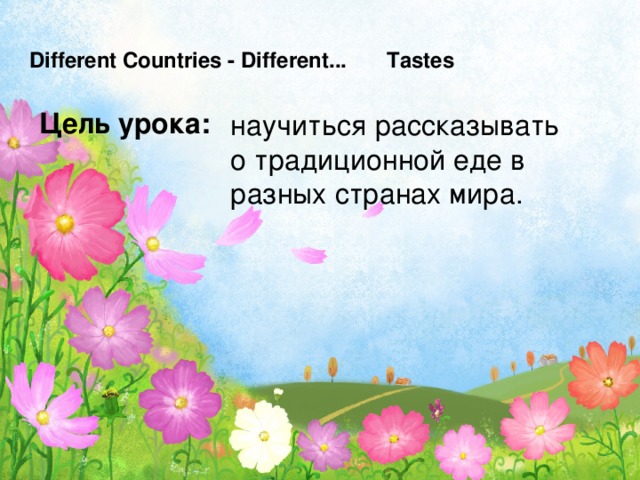
Different Countries - Different...  Tastes Цель урока: научиться рассказывать о традиционной еде в разных странах мира.

Different Countries - Different...

Tastes

Цель урока:

научиться рассказывать о традиционной еде в разных странах мира.

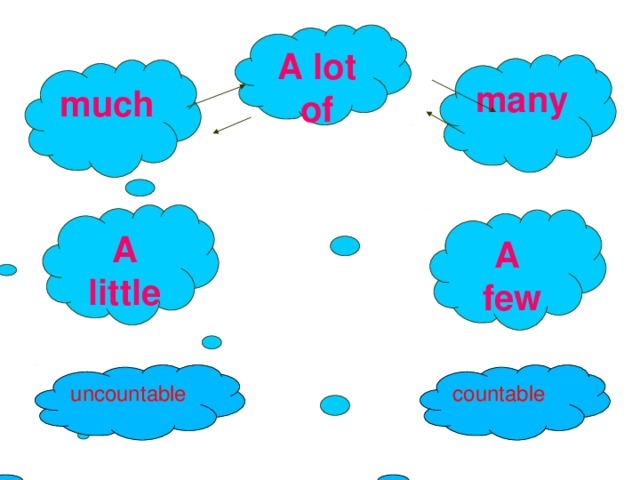
A lot of many much A little A few uncountable countable

A lot of

many

much

A little

A

few

uncountable

countable

What do you usually have for breakfast? Which drinks do you like and which don’t you like? Which fruit do you like? What can you make yourself and what can’t you make? (omelette, boiled eggs, sandwiches, fish and chips, baked potatoes, pizza, toast What is your favourite food? (pizza, fish and chips, roast chicken, meat pie, baked potatoes, hot dog, hamburgers, soup)

What do you usually have for breakfast?

Which drinks do you like and which don’t you like?

Which fruit do you like?

What can you make yourself and what can’t you make?

(omelette, boiled eggs, sandwiches, fish and chips, baked potatoes, pizza, toast

What is your favourite food?

(pizza, fish and chips, roast chicken, meat pie, baked potatoes, hot dog, hamburgers, soup)

What do you like to eat? What is your favourite food?

What do you like to eat?

What is your favourite food?

corn flakes with milk and sugar, steak, roast beef, Yorkshire pudding,  fruit pie,  cereal or scrambled eggs, fried potatoes, vegetable salads,  fried or baked potatoes with ketchup or sour cream,  fried fish and mashed potatoes, beefsteak and omelette,  a croissant or some yoghurt,  Vegetables and pasta, cereals with milk, rice, pasta, French onion soup, cheese soufflé, roasted turkey, chicken and mushrooms Crepes, French roasted chicken with cabbage, smoked salmon,  chocolate profiteroles, chocolate mousse and apple tart

corn flakes with milk and sugar, steak, roast beef, Yorkshire pudding, fruit pie, cereal or scrambled eggs, fried potatoes, vegetable salads, fried or baked potatoes with ketchup or sour cream, fried fish and mashed potatoes, beefsteak and omelette, a croissant or some yoghurt, Vegetables and pasta, cereals with milk, rice, pasta, French onion soup, cheese soufflé, roasted turkey, chicken and mushrooms Crepes, French roasted chicken with cabbage, smoked salmon,

chocolate profiteroles, chocolate mousse and apple tart

The (……..) usually have ….. meals a day. For breakfast they usually have… For lunch they like… For dinner…. For supper… The main meal is…

The (……..) usually have ….. meals a day.

For breakfast they usually have…

For lunch they like…

For dinner….

For supper…

The main meal is…

Meals in Britain   Americans eat a lot   Russian Food    French Food

Meals in Britain

Americans eat a lot

Russian Food

French Food

Meals in Britain

Meals in Britain

  • Breakfast : corn flakes with milk and sugar, or bacon and eggs, toast and marmalade, a cup of tea or coffee with a toast.
  • Lunch : steak, roast beef, Yorkshire pudding, and fish and chips
  • Dinner : soup, fish or meat, the traditional roast beef of old England, and a lot of vegetables.
  • Sweet and often baked, such as a fruit pie, cheese, biscuits.
Americans eat a lot  Breakfast: cereal or scrambled eggs, milk or orange juice Lunch: chicken or fish, fried potatoes, vegetable salads, and desert Dinner: meat, fried or baked potatoes with ketchup or sour cream, corn, peas, sometimes macaroni and cheese or spaghetti; ice-cream, fruit or cake may be for dessert.

Americans eat a lot

  • Breakfast: cereal or scrambled eggs, milk or orange juice
  • Lunch: chicken or fish, fried potatoes, vegetable salads, and desert
  • Dinner: meat, fried or baked potatoes with ketchup or sour cream, corn, peas, sometimes macaroni and cheese or spaghetti;
  • ice-cream, fruit or cake may be for dessert.

Russian Food

Russian Food

  • Breakfast: bacon and eggs, sandwiches with butter and cheese or sausages, or sometimes jam, tea or coffee.
  • Lunch: fruit juice, vegetable salad and sandwiches or pies with tea.
  • Dinner: soup or borsch, meat or fish with a lot of vegetables. For dessert I often have stewed fruit or jelly.
  • Supper: fried fish and mashed potatoes, beefsteak and omelette, salads, a glass of warm milk with biscuits.
French Food Breakfast: tea or coffee, bread or toasts with butter or marmalade, croissant or a chocolate. Orange juice. For children: cereals with milk. Lunch: fish or some meat, salad, vegetables, desserts, wine, bread and cheeses. Dinner: meat or fish, served with side dishes of salads, rice, or pasta, French onion soup, cheese soufflé. Supper: roasted turkey, chicken and mushrooms Crepes, French roasted chicken with cabbage, smoked salmon  French desserts: chocolate profiteroles, chocolate mousse and apple tart

French Food

  • Breakfast: tea or coffee, bread or toasts with butter or marmalade, croissant or a chocolate. Orange juice. For children: cereals with milk.
  • Lunch: fish or some meat, salad, vegetables, desserts, wine, bread and cheeses.
  • Dinner: meat or fish, served with side dishes of salads, rice, or pasta, French onion soup, cheese soufflé.
  • Supper: roasted turkey, chicken and mushrooms Crepes, French roasted chicken with cabbage, smoked salmon

French desserts: chocolate profiteroles, chocolate mousse and apple tart

Think about yourself and complete sentences:  It was difficult for me… - мне было трудно..  It was interesting for me…- мне было интересно…  I was good at… - могу себя похвалить…

Think about yourself and complete sentences:

  • It was difficult for me… -

мне было трудно..

  • It was interesting for me…-

мне было интересно…

  • I was good at…

- могу себя похвалить…

Your Homework Make up a crossword about food. Find some more  proverbs or riddles about food. Find in the Internet some more information about exotic food  in different countries.

Your Homework

Make up a

crossword

about food.

Find

some more

proverbs or

riddles

about food.

Find in the Internet

some more

information

about exotic food

in different

countries.

Good Luck!

Good Luck!

-80%
Курсы профессиональной переподготовке

Филолог

Продолжительность 300 или 600 часов
Документ: Диплом о профессиональной переподготовке
13800 руб.
от 2760 руб.
Подробнее
Скачать разработку
Сохранить у себя:
"Разные страны - разные вкусы" (698.05 KB)

Комментарии 0

Чтобы добавить комментарий зарегистрируйтесь или на сайт