
 Получите свидетельство
 Вход
Вход


Урок-дискусія:
Mobile Technology
10 клас
Вчитель: Орішич Н.М.
Topic: Mobile Technology: Mobile Mad?
Мети:
– удосконалювати мовленеві навички учнів з теми уроку використовуючи тематичний вокабуляр;
опрацьовувати вживання умовних речень змішаного типу;
активізувати навички аудіювання (прослуховуваючи текст Mobile Phones);
удосконалювати навички читання, метою якого є відшукати деталі;
– розвивати навички співпраці у малих групах;
Розвивати мовленеву реакцію та аналітичне мовлення учнів;
– виховувати толерантне відношення до думок співучнів;
допомогати учням набути сбалансованого розуміння та ставлення до науково-технічного прогресу.
Lesson Background:
This lesson will continue a series of lessons on the topic “The progress of science: for and against”. In the previous lessons the students the advantages and disadvantages of using atomic energy, computers, etc. This lesson offers extended practice on the topic “The progress of science” and it is the first lesson out of two devoted to the use of mobiles, the device that is vital for modern teens thus it will sustain students’ interest and ensure meaningful engagement. In this lesson the students are preparing for the class discussion on the positive and negative role of mobile phones that will take place in the next lesson. The will work in small groups to carry out the tasks that will prepare them for the class discussion. The student will use the realia and authentic material that will give them some ideas on the subject but they will still need to compile and analyze information for further discussion.
Learning Objectives/Expected Results:
Students will apply vocabulary and collocations they have learned from their previous lessons on the topic “The progress of science”. They will enlarge and practice the vocabulary on the topic “Mobile Phones”. They will need to manage their group so that they can carry out the tasks that should result in the improved collaborative skill. They will propose the arguments in favor or against mobile phones and develop critical thinking skill when they analyze the arguments trying to arrange the arguments in the order of importance. They will be practicing all language skills as they work out the lists of arguments for or against mobile phones.
Materials and Sources:.
Materials:
Students’ mobile phones (switched to the menu in English)
Audio “Mobile Phones” (from Learn English | British Council)
Handouts with the Listening Comprehension assignment, article “Mobile Mad” (from New Total English Student’s Book Upper-Intermediate), Reading Comprehension assignment; a handout for making lists of arguments for and against mobiles attached – see below.
Video files from YouTube
Sources:
Learn English | British Council | “Mobile Phones” [Audio file]. Available at https://learnenglish.britishcouncil.org/en/magazine-articles/mobile-phones
Mobile Mad. Pearson Longman New Total English Upper-Intermediate Student’s Book, p.14
“How Has the Cell Phone Changed Your Life” [Video files.] Retrieved from https://www.youtube.com/watch?v=jI_hIGKIMl0
https://www.youtube.com/watch?v=bD8et5GFPvY
Activities: pupils
Listen to the objectives of the lesson. Warm up.
Greeting.
Warming up.
Teacher: Today we are going to continue speaking about the progress of science in our life. We can hardly imagine modern life without countless devices and innovations that have been created by application of science such as robots, cars, computers etc. Say what our life would be like if some of them hadn’t been invented.
(There are slides with the pictures of computer, robot, space craft, atomic energy, washing machine, penicillin, electric bulb etc.)
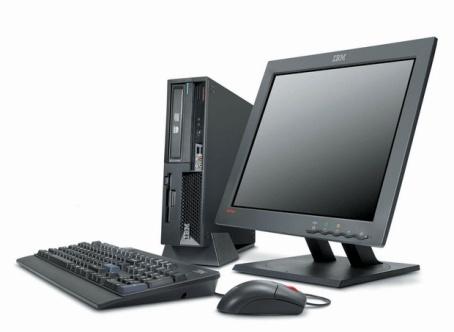
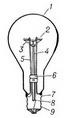






Pupils make up Conditional sentences (mixed type) using the pattern written on the blackboard:
If the … hadn’t been invented (discovered) we would…
Example: If penicillin hadn’t been discovered we wouldn’t be able to cure many diseases.
Pupils listen to the objectives of the lesson.
Teacher: Really, we see how much science has changed our life. Today we are going to concentrate on the device that appeared not so long ago but is taken so much for granted – the mobile phone. So, our topic today is Mobile Technology: Mobile Mad?
Answer the questions the role of the mobile phone in the pupils’ life:
A)
Do you have a mobile phone?
How long have you had it?
Is it important for you? Why?
B)
How do you use your mobile phone?
(Teacher asks the pupils to take their mobiles, to switch to the menu in English and to tell the class about the functions their phones have and which ones they use.
Pupils show their devices to the class and speak about the functions they use revising the topical vocabulary with the help of the menu in English)
Listen to the text “Mobile Phones” by Craig Dunkan.
Pre-listening.
Do you know anything from the history of the mobile phone?
Who invented it? What opportunities does it give people?
Tapescript:
Mobile phones
by Craig Duncan
When Scotsman Alexander Graham Bell invented the telephone in 1876, it was a revolution in communication. For the first time, people could talk to each other over great distances almost as clearly as if they were in the same room. Nowadays, though, we increasingly use Bell’s invention for emails, faxes and the internet rather than talking. Over the last two decades a new means of spoken communication has emerged: the mobile phone.
The first real mobile telephone call was made in 1973 by Dr Martin Cooper, the scientist who invented the modern mobile handset. As soon as his invention was complete, he tested it by calling a rival scientist to announce his success. Within a decade, mobile phones became available to the public. The streets of modern cities began to feature sharp-suited characters shouting into giant plastic bricks. In Britain the mobile phone quickly became synonymous with the “yuppie”, the new breed of young urban professionals who carried the expensive handsets as status symbols. Around this time many of us swore that we would never, ever own a mobile phone.
But in the mid-90s, something happened. Cheaper handsets and cheaper calling rates meant that, almost overnight, it seemed that everyone had a mobile phone. And the giant plastic bricks of the 80s had evolved into smooth little objects that fitted nicely into pockets and bags. In every pub and restaurant you could hear the bleep and buzz of mobiles ringing and registering messages, occasionally breaking out into primitive versions of the latest pop songs. Cities suddenly had a new, postmodern birdsong.
Moreover, people’s timekeeping changed. Younger readers will be amazed to know that, not long ago, people made spoken arrangements to meet at a certain place at a certain time. Once a time and place had been agreed, people met as agreed. Somewhere around the new millennium, this practice started to die out. Meeting times became approximate, subject to change at any moment under the new order of communication: the Short Message Service (SMS) or text message. Going to be late? Send a text message! It takes much less effort than arriving on time, and it’s much less awkward than explaining your lateness face-to-face. It’s the perfect communication method for the busy modern lifestyle
Mobile phones, once the preserve of the high-powered businessperson and the “yuppie”, are now a vital part of daily life for an enormous amount of people. From schoolchildren to pensioners, every section of society has found that it’s easier to stay in touch when you’ve got a mobile. Over the last few years mobiles have become more and more advanced, with built-in cameras, global positioning devices and internet access. And in the next couple of years, we can expect to see the arrival of the “third generation” of mobile phones: powerful micro-computers with broadband internet access, which will allow us to watch TV, download internet files at high speed and send instant video clips to friends.
Alexander Graham Bell would be amazed if he could see how far the science of telephony has progressed in less than 150 years. If he were around today, he might say: “That’s gr8! But I’m v busy rite now. Will call U 2nite
The text we are going to listen to will give us the answers to all these questions. In the text the pupils will come across the new word “a Yuppie”
Yuppies – a generation of young urban professionals, ambitious and goal-oriented.
While listening to the text take notes to list the opportunities the mobile technology gives us.
After listening to the text:
Complete the sentences from the text choosing an appropriate answer (pair-work):
The mobile phone was invented
In 1876 by Alexander Graham Bell
In 1970-s by Dr Martin Cooper
In 1990-s by a yuppie
The first mobile phone call took place between
Two scientists
Two Scotsmen
Two yuppies
The first commercially available mobile phones looked like
Small, pocket-sized objects
Telephone masts
Giant plastic bricks
More people bought mobile phones in the 1990-s because
Traditional phones didn’t work any more
They were bad at timekeeping
mobile phones became a lot cheaper
Mobile phones provide all of the following opportunities EXCEPT
Watching TV
Making you a yuppie
Downloading Internet files at high speed
Champion Game.
Pupils are divided into 3 teams of “Reds”, “Greens” and “Blues” (random grouping, using colored cards).
Groups discuss the opportunities of mobiles mentioned in the article using their notes to fill in the Listening comprehension task (handout 1)
| What can people do with the help of mobile technology? Which of the statements are True or False according to the article? Put T next to the true statements and F next to the false ones.
|
The teams stand in lines in front of the blackboard and play the “Champion” game answering the questions:
- What opportunities does the mobile phone give people?
-What can we do with its help?
Teacher: As we see, the mobile phone gives us a lot of opportunities. So, it must be a blessing! But is the situation so optimistic?
Read the text “Mobile Mad”.
Pre-reading task: comment on the heading of the text “Mobile Mad”. What may the article be about?
Learn the active vocabulary of the text:
Vocabulary:
Alarming – causing the feeling of anxiety, fear; (worrying)
Peers – people of the same age, rank etc.
Superficial - lacking originality, significance
To affect – to influence
To increase – to grow or expand
Emergency - a sudden occurrence, especially of a danger demanding immediate action
Read the text in 3 groups paying attention to the problems the mobile phone may cause.
MOBILE MAD
In Japan, where mobiles have been common among the young for some time and offer various services, sociologists see an alarming trend. The use of mobiles is so huge that there is hardly a child between 6 and 15 who does not have one.
Such a density of mobile ownership has led to a new type of neurosis, say sociologists. Teens have become fanatical about being “always available” and not wanting to lose touch. “Indeed, many teenagers feel uneasy if they can’t be in touch with their peers countless times a day, fearing they are becoming socially isolated,” writes sociologist Hisao Ishii, the author of The Superficial Social Life of Japan’s Mobile Phone Addicts. 15-year-old Miki Naxamura backs it up saying: “I’m completely out of touch with the world without my phone and I go into a total panic!”
If this continues, adds Hisao Ishii, two things will probably happen. One is mobile phone addiction, where a person doesn’t have the necessary skills to form relationships without the help of the mobiles. The second: superficial communication may kill real conversation. The act of contacting each other may become all that matters, it may affect the quality of relationships. The very fabric of society may be threatened.
The sociologist Maiko Seki has also suggested that “children read books less and less as they are too busy playing with their technological tools”. As well as this, it may be that academic performance is being affected: according to DaCoMo survey, 68% of children who said that they owned a mobile phone said they got poor marks at school. In addition to this, a recent UK government report mentioned the increased health risk to children under 16 using mobile handsets. So, children shouldn’t have unlimited access to mobile phones and they should be used only in emergencies.
After reading the text decide
if the statements are True or False (for group 1)
(Extension activities for stronger students):
expand on the True statements (group 2)
correct the False statements (group 3)
Say if the following statements are True or False:
Sociologists don’t see any problem in the increased number of mobiles owned by teens.
Teenagers feel uncomfortable without their mobile phones.
Mobile phones may influence real conversation positively.
Mobile phones affect the academic performance of teens.
The use of mobiles is dangerous for health.
Express the opinion whether the author of the article is in favour or against mobile phones. Why?
So, is the mobile phone a curse or a blessing?
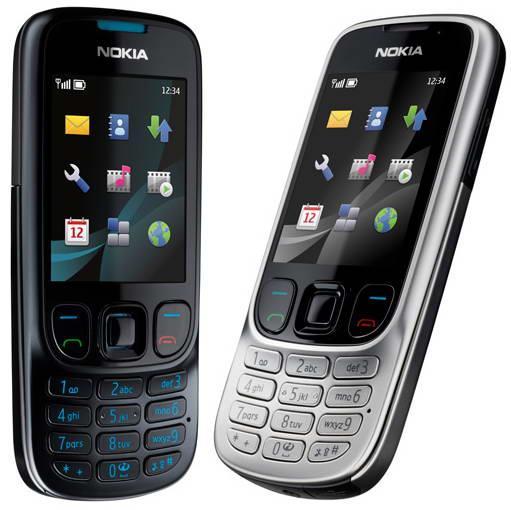
?
Watch video files from YouTube “How Has the Cell Phone Changed Your Life” and learn what different people say about the influence of mobiles:
https://www.youtube.com/watch?v=jI_hIGKIMl0
https://www.youtube.com/watch?v=bD8et5GFPvY
Work in 2 teams: work out the list of arguments
for mobile phones
against mobile phones
Pupils form teams with the teacher’s guidance.
Decide on the roles in the teams (a leader, a scribe, a time monitor, a grammar and vocabulary monitors etc.)
Brainstorm the ideas and write them in the Brainstorming section.
Discuss the ideas ranking them in the order of importance. Fill in the appropriate section of the table.
Handout 2
| Brainstorming section
| ||||||||||||||||||||||||
| Mobile Phones: For and Against
|
Pupils may give the following arguments:
| FOR
| AGAINST
|
Have a group discussion on pros and cons of the mobile technology.
(Use the Conversational Formulas Agreement/Disagreement)
| AGREEMENT
| DISAGREEMENT
|
Draw the conclusion about the role of the mobile phones in our life.
Summing up and evaluation.
Pupils: sum up what they have done and learnt in the lesson.
Teacher: comments on the results of the pupils’ performance and evaluates them.
Home task: write the essay “Mobile Phones: a curse or a blessing?”





 Урок-дискуссия "mobile technology" (140.83 KB)
 0
0 887
887 34
34 Нравится
0
Нравится
0


