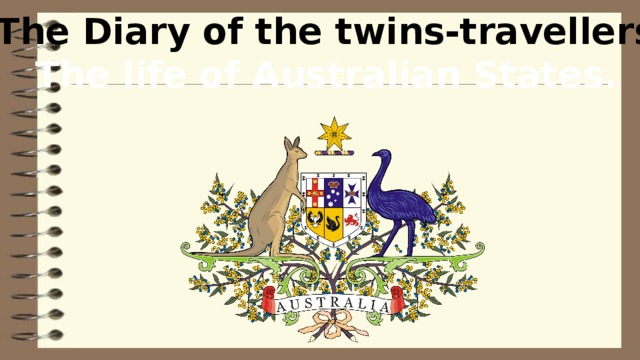
Презентация выполнена на конкурс проектов на иностранном языке. Исследование презентовано в виде дневника-путеводителя по Австралии.
“The Diary of the twins-travellers: the life of Australian States”
Slide 1(introduction): Hello! My name is Marina, my name is Ann and we are young travellers!
Have you ever been to Australia? Do you know much about this country?
What is Australia really like? Nobody seems to know besides the Australians themselves.
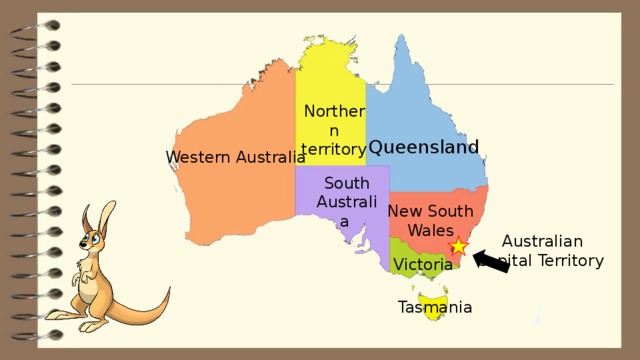
Slide 2: before the trip, we had searched for some information and found that there are 6 states and 2 territories in Australia.
The States are Queensland, New South Wales, Victoria, South Australia, Western Australia and Tasmania.
The territories are Australian Capital Territory and Northern Territory.
This fact had caught our attention. Is life different in each state? What are the differences? So, we set off for a trip to this mysterious continent in order to find all the answers.
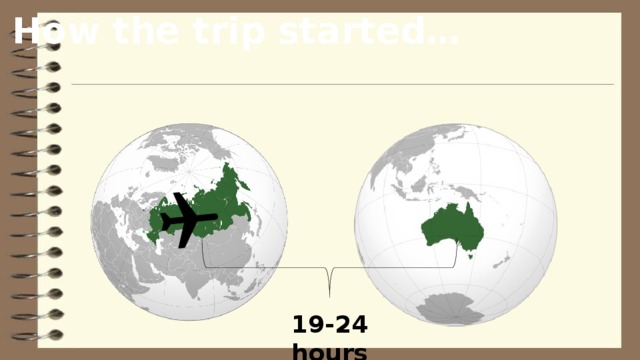
Slide 3: The only way to get to Australia is by plane. It took us 20 hours to reach the land.
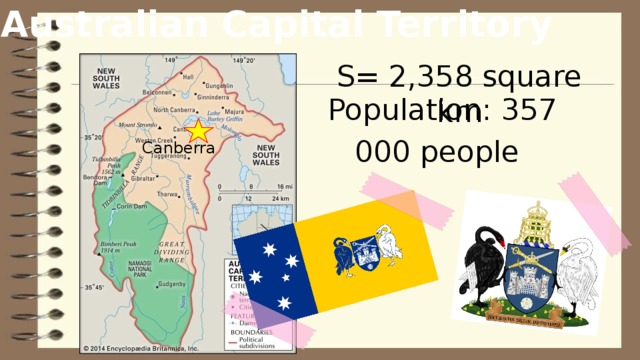
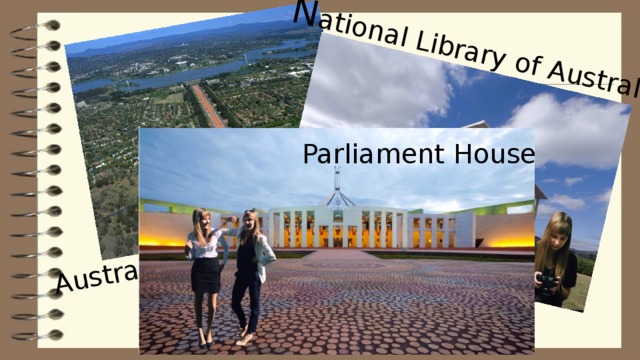
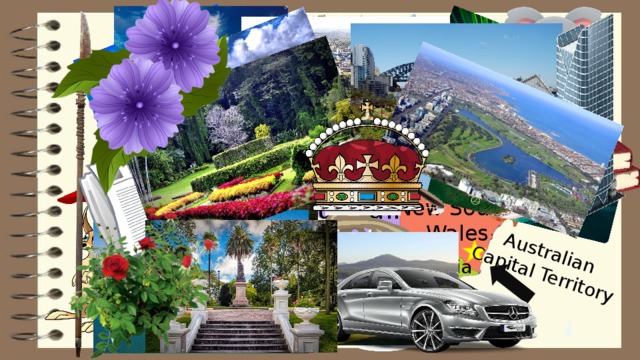
Slide 4: on the first day of our trip, we landed in the capital of Australia – Canberra (not Sydney as many people may think.)
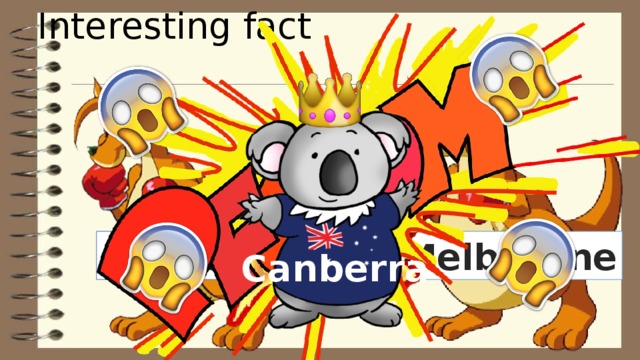
Slide 5: Interesting fact: long ago Sydney and Melbourne competed on the status of the capital. As a result, Canberra, being specially built, became the capital.
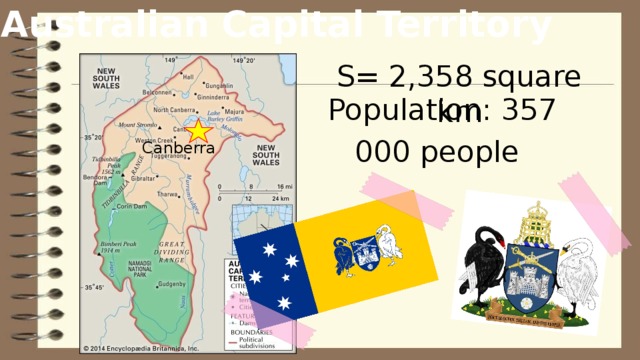
Slide 6: It is situated in Australians Capital Territory. Canberra is Australia’s largest inland city yet the ACT is Australia’s smallest self-governing internal territory.
Slide 7: With Canberra being a relatively new and carefully planned city in Australia, some people think it is a bit on the boring and conservative side. The Australians call this territory “the capital”.
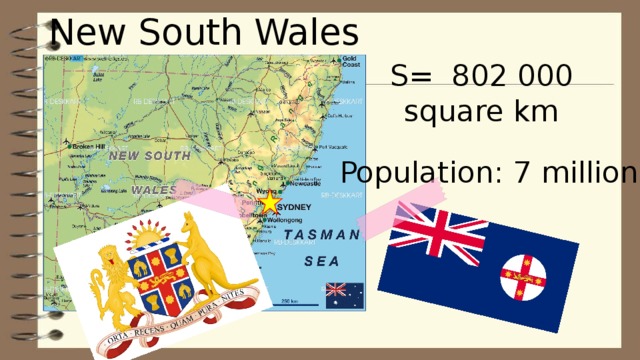
Slide 8: Our second stop was New South Wales where we visited Sydney – the capital of the state. New South Wales is the most populous and heavily industrialised State in Australia, with a highly urbanised population. Sydney is the site of the country’s oldest European settlement and its largest and most cosmopolitan city, with ethnic communities from more than 100 countries.
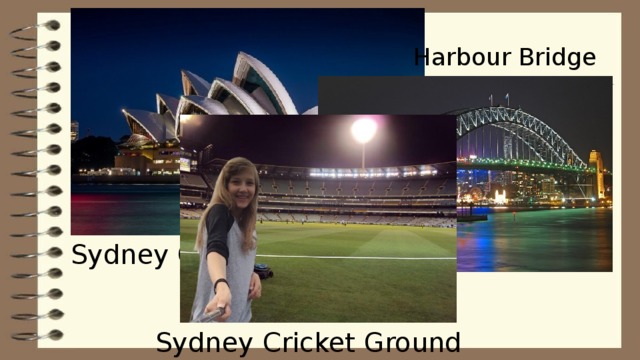
Slide 9: The city’s icons include, The Sydney Opera House, Sydney Harbour Bridge and The Sydney Cricket Ground. The Australians call this state “The Premier State”
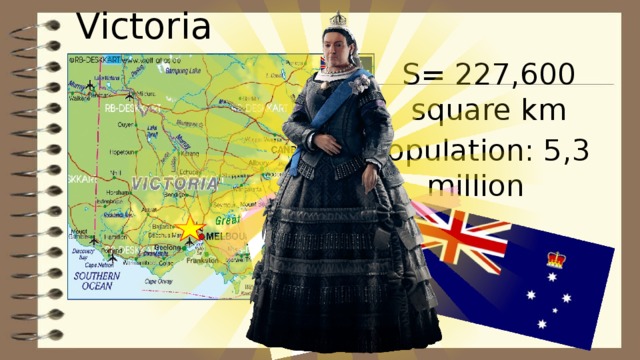
Slide 10: The third stop was Victoria. This state was named after The British Queen Victoria.
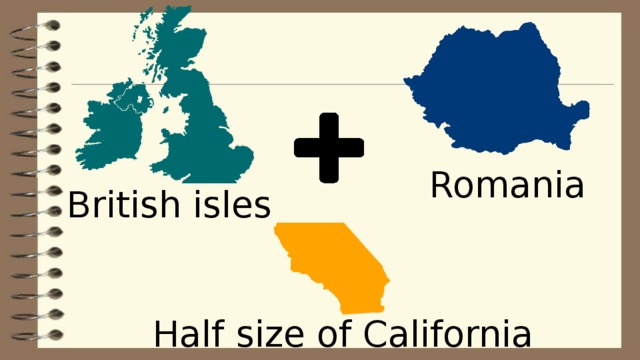
Slide 11: Victoria is Australia’s second-smallest state; it is roughly the size of the British Isles, Romania and just over half the size of California.
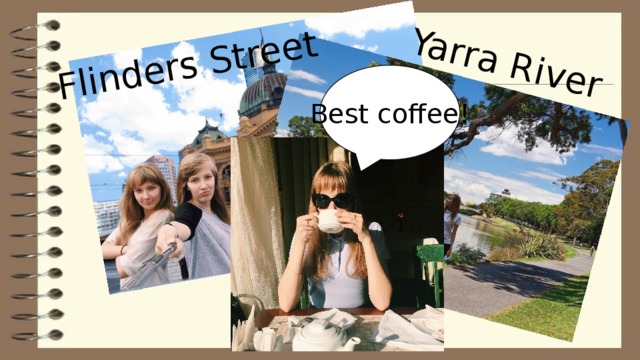
Slide 12: Victoria’s capital, Melbourne is located around the shores of Port Phillip Bay. The city itself sits beside the Yarra River, about five kilometres from the bay. The Australians call this state “the garden state” because Royal Botanic Gardens are situated in Melbourne. By the way, the best coffee in Australia is in Victoria! But despite this fact, the life here lasts very slowly.
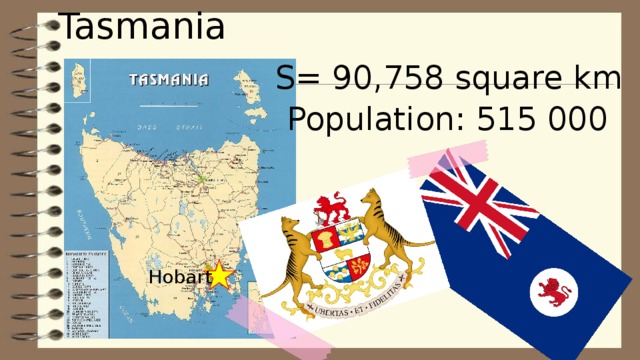
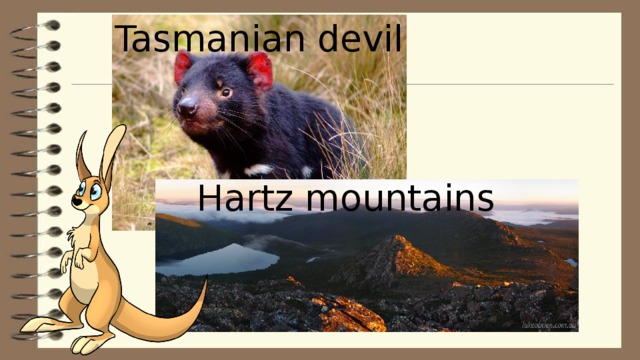
Slide 13: The forth stop was Tasmania. It is the only state that is separated from the mainland. The capital is Hobart. When Abel Janszoon Tasman, the Dutch explorer who discovered Australia sailed passed the west coast of Tasmania, he named it Van Diemen's Land after the governor of Batavia. In 1856 the name was changed to Tasmania.
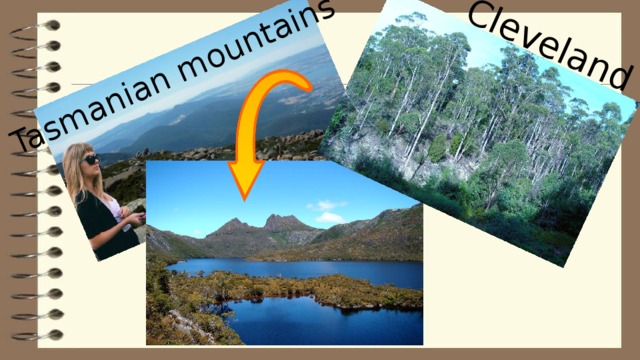
Slide 14: The Australians call this State “the apple isle” because Tasmania is a natural island, a land of dramatic coastlines, rugged mountains, tall forests and sparkling highland lakes.
Slide 15: Over a third of the state is reserved in a network of National Parks and the Tasmanian Wilderness World Heritage Area is a refuge and habitat for rare plants and animals, including survivors of the ancient southern super continent, Gondwana.
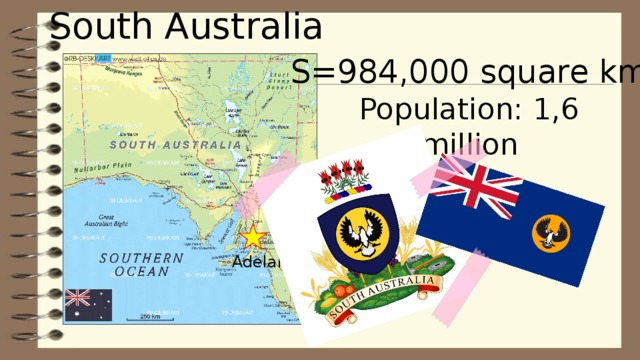
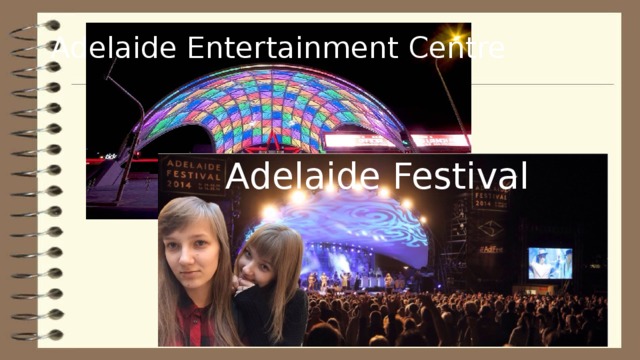
Slide 16: The fifth stop was South Australia. Adelaide, the capital city of South Australia, jealously guards its reputation as Australia’s arts capital, boasting a multitude of festivals, a vibrant live music scene, galleries, design and fashion, theatre, architecture.
Slide 17: That is why The Australians call this state “the Festival state”. To our mind, it is actually true. Also, it is the driest state in the country.
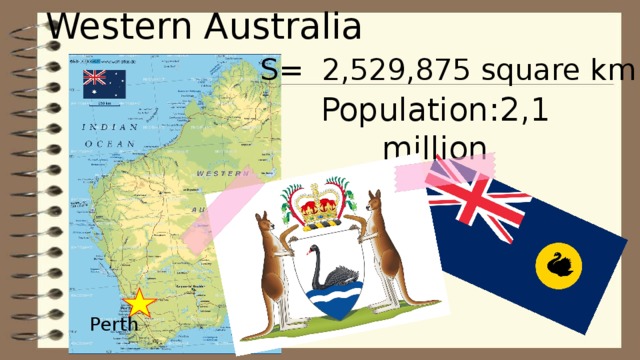
Slide 18: The sixth stop was Western Australia. It is the biggest state in the country. The capital of the state is Perth.
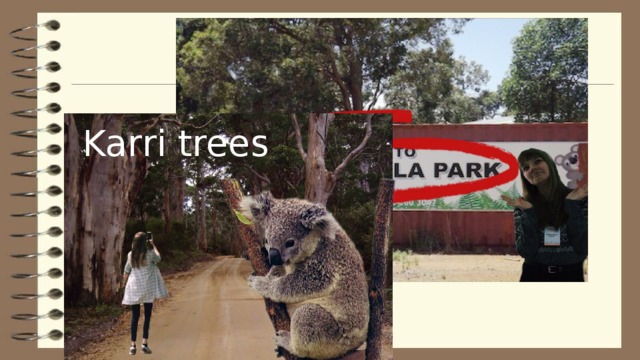
Slide 19: Western Australia is known as The Wildflower state because there you will find forests with huge stands of Karri trees. These are one of the tallest tree species in the world! Can you imagine how huge they are?
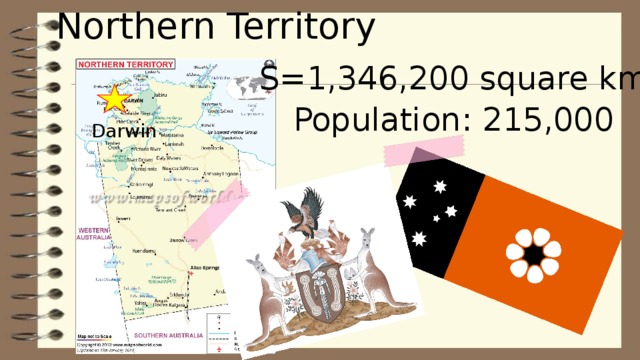
Slide 20: The next stop was Northern Territory. The Northern Territory is the most "Outback" state; in fact, all of the territory is outback.
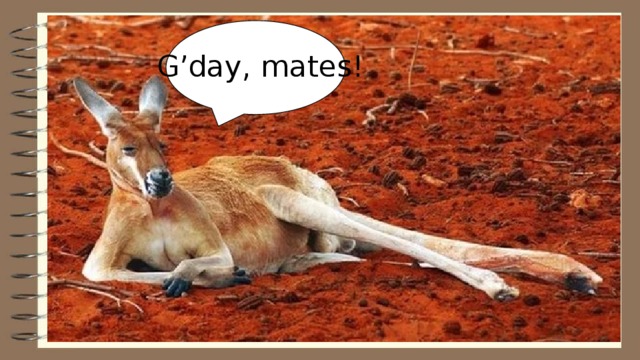
Slide 21: We wanted to see a typical citizen of this area and that is whom we saw…but actually, the population also includes people of many ethnic backgrounds as well as those of aboriginal descent.
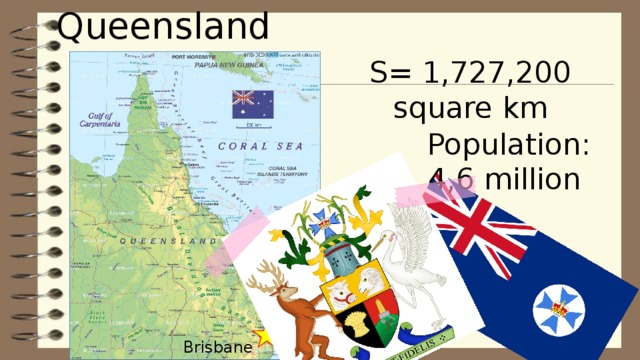
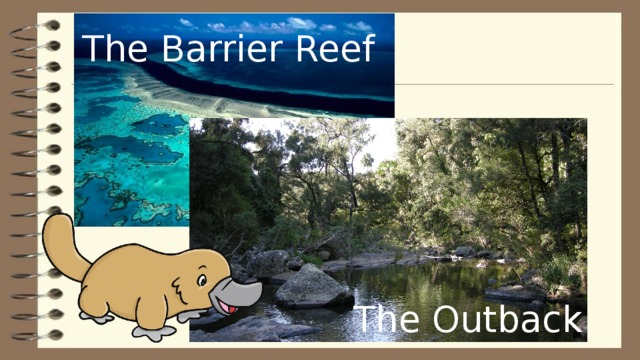
Slide 22: The last stop of our trip was Queensland. Queensland is Australia's holiday state. It is well-known for the Barrier Reef and its beautiful beaches and islands along the coast. However, there is also a lot of Outback to explore. The state was named after The Queen Victoria as well as Victoria State.
Slide 23: The Australians call this state “The sunshine state” because it enjoys more winter sunshine and warmth than most Australian cities and is perfect for outdoor activities and water sports.
Slide 24 (conclusion): This trip showed us the life of this distant country. We definitely recommend you to visit Australia! If you are in favour of beach holidays, festivals and parties then South Australia and Queensland are perfect for you. If you like extreme tourism and want to see the wild nature then Northern territory, Western Australia and Tasmania will show you everything you are looking for. If you want to see the conservative side of the country then visit Australian Capital Territory and you will not regret! If you are fond of modern architecture then we recommend you to visit New South Wales with one of the most urbanised cities in the world – Sydney. Victoria is also worth your visit! The parks and gardens in this state will bring you many memories you will not forget!
Slide 25: And, of course, you cannot help taking “selfie” here because this word was created in Australia!
Slide 26: Thus, Australia seems to be made up of small countries because, as we have learnt, the states are very different. However, they form one of the most beautiful, unusual and unique countries in the world.

 Получите свидетельство
 Вход
Вход





 The diary of the twins-travellers (21.21 MB)
 0
0 422
422 4
4 Нравится
0
Нравится
0


