
 Получите свидетельство
 Вход
Вход



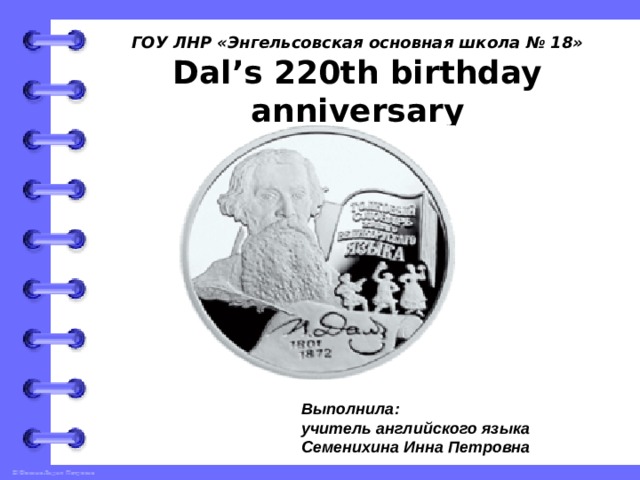
ГОУ ЛНР «Энгельсовская основная школа № 18» Dal’s 220th birthday anniversary
Выполнила:
учитель английского языка
Семенихина Инна Петровна
Цели: -познакомить учащихся с биографией знаменитого земляка В.И. Даля; показать значение деятельности В.И. Даля для русской культуры и истории; сформировать представление о фундаментальной личности знаменитого деятеля; развивать кругозор учащихся; -развивать устную речь учащихся на уроках английского языка -воспитывать любовь к своей малой родине, гордость за выдающихся людей Луганской земли.
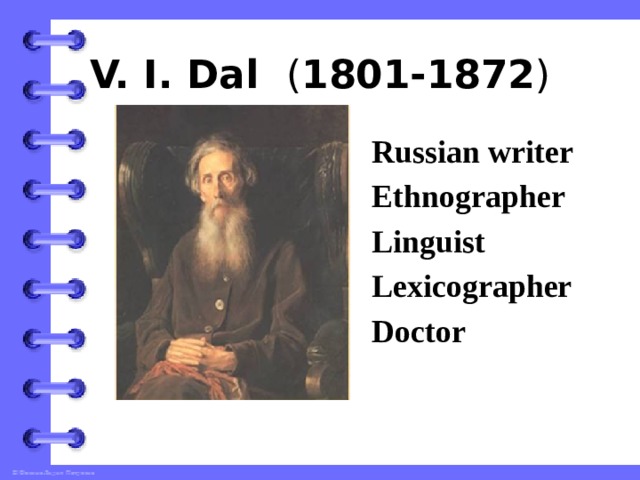
V. I. Dal ( 1801-1872 )
Russian writer
Ethnographer
Linguist
Lexicographer
Doctor
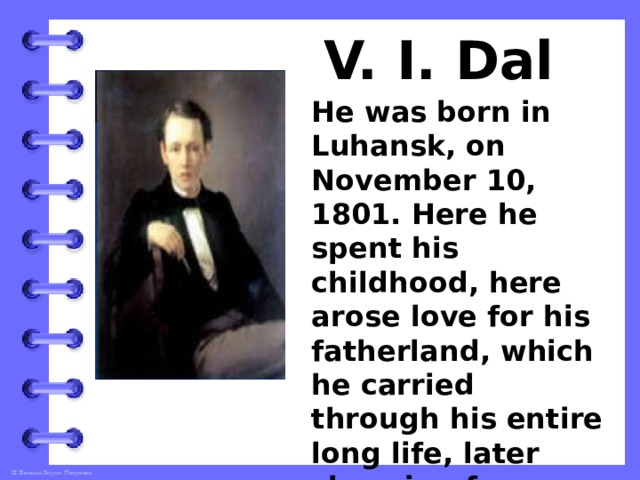
V. I. Dal
He was born in Luhansk, on November 10, 1801. Here he spent his childhood, here arose love for his fatherland, which he carried through his entire long life, later choosing for himself the literary pen name Kazak Lugansky
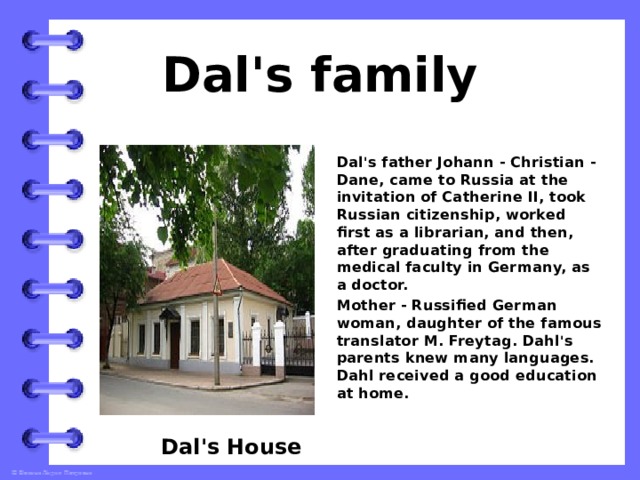
Dal's family
Dal's father Johann - Christian - Dane, came to Russia at the invitation of Catherine II, took Russian citizenship, worked first as a librarian, and then, after graduating from the medical faculty in Germany, as a doctor.
Mother - Russified German woman, daughter of the famous translator M. Freytag. Dahl's parents knew many languages. Dahl received a good education at home.
Dal's House
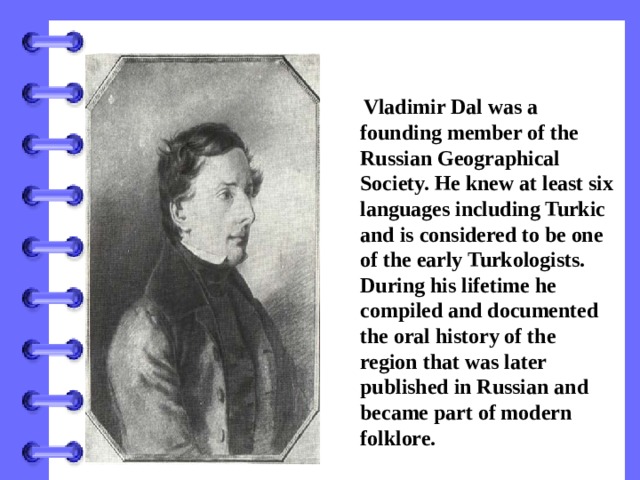
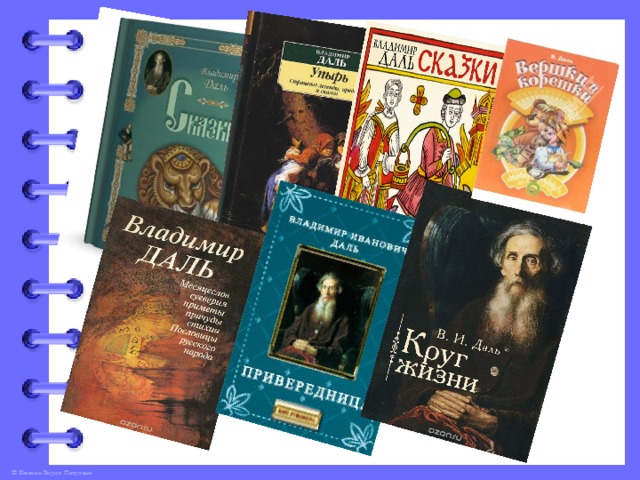
Vladimir Dal was a founding member of the Russian Geographical Society. He knew at least six languages including Turkic and is considered to be one of the early Turkologists. During his lifetime he compiled and documented the oral history of the region that was later published in Russian and became part of modern folklore.
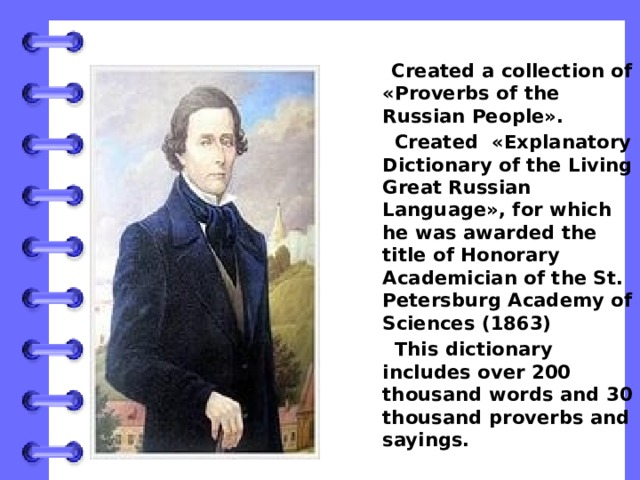
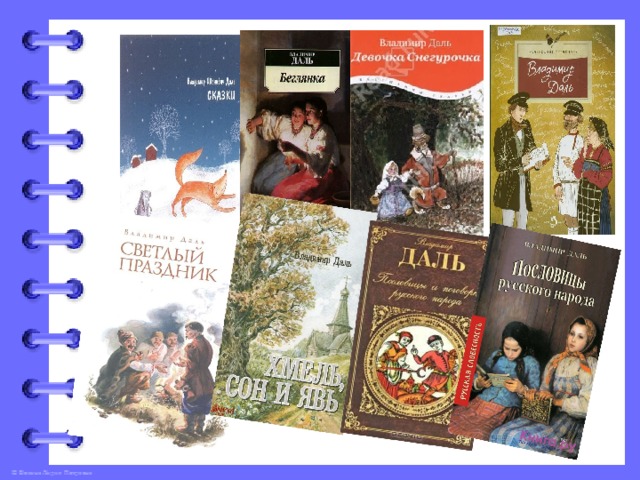
Created a collection of «Proverbs of the Russian People».
Created «Explanatory Dictionary of the Living Great Russian Language», for which he was awarded the title of Honorary Academician of the St. Petersburg Academy of Sciences (1863)
This dictionary includes over 200 thousand words and 30 thousand proverbs and sayings.
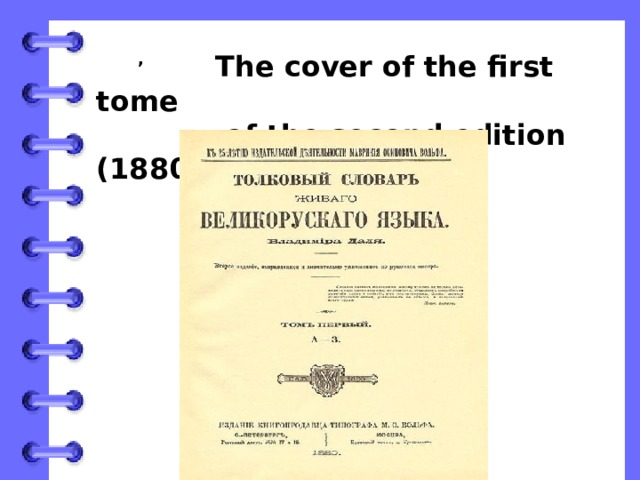
,
The cover of the first tome
of the second edition (1880)
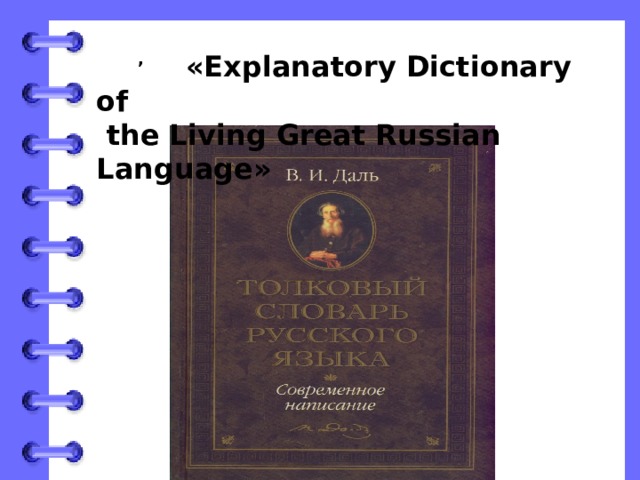
,
«Explanatory Dictionary of
the Living Great Russian Language»
Talented person
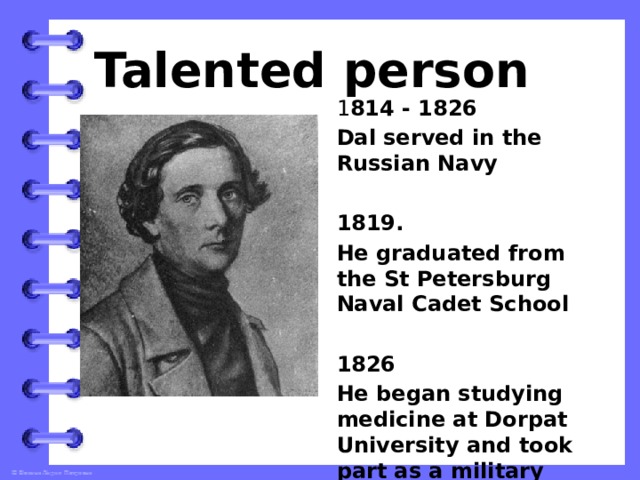
1 814 - 1826
Dal served in the Russian Navy
1819.
He graduated from the St Petersburg Naval Cadet School
1826
He began studying medicine at Dorpat University and took part as a military doctor in the Russo-Turkish War and the campaign against Poland
Talented person
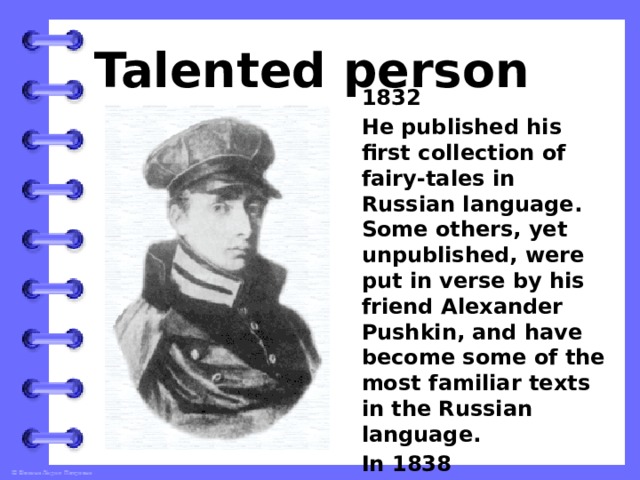
1832
He published his first collection of fairy-tales in Russian language. Some others, yet unpublished, were put in verse by his friend Alexander Pushkin, and have become some of the most familiar texts in the Russian language.
In 1838
He was elected to the Russian Academy of Sciences.
Acquaintance with Pushkin
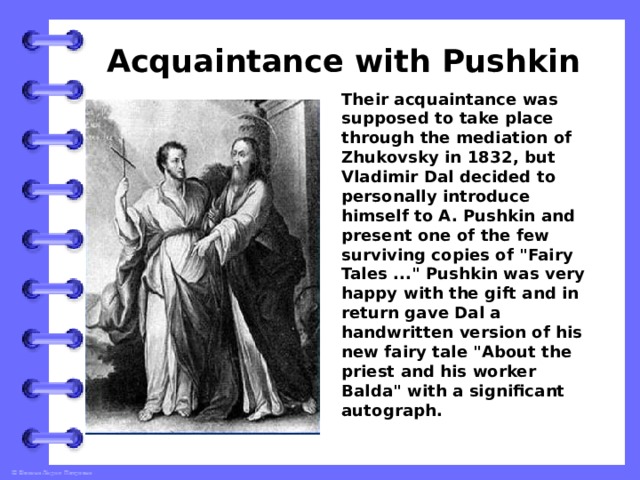
Their acquaintance was supposed to take place through the mediation of Zhukovsky in 1832, but Vladimir Dal decided to personally introduce himself to A. Pushkin and present one of the few surviving copies of "Fairy Tales ..." Pushkin was very happy with the gift and in return gave Dal a handwritten version of his new fairy tale "About the priest and his worker Balda" with a significant autograph.
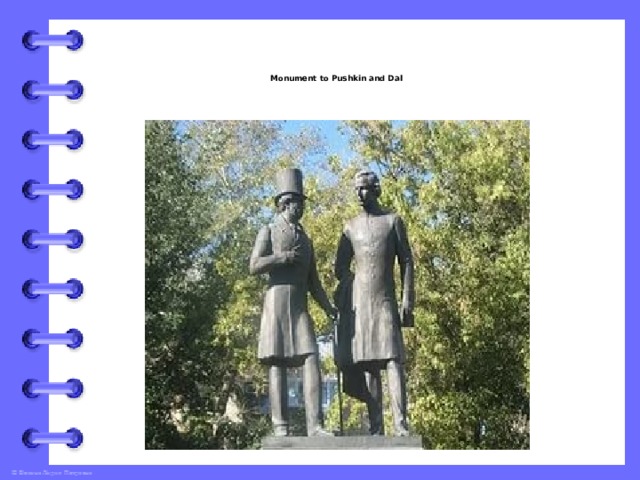
Monument to Pushkin and Dal
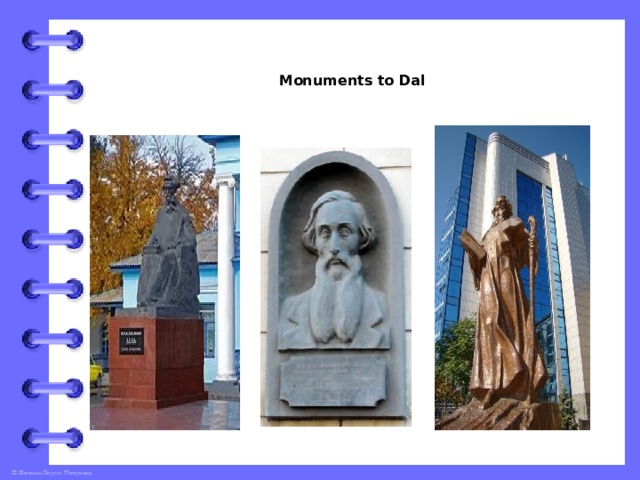
Monuments to Dal
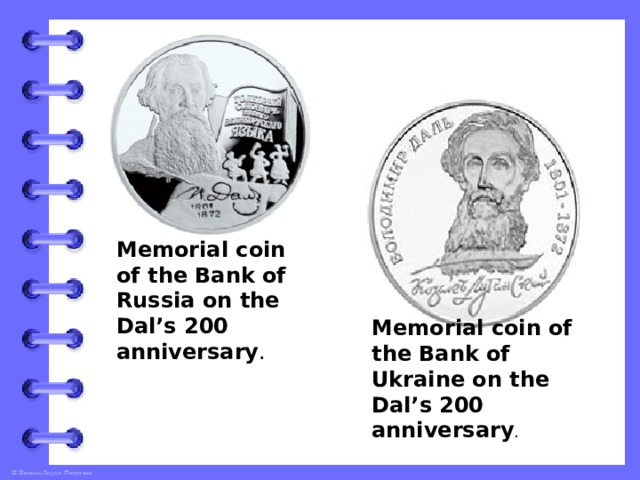
Memorial coin of the Bank of Russia on the Dal’s 200 anniversary .
Memorial coin of the Bank of Ukraine on the Dal’s 200 anniversary .
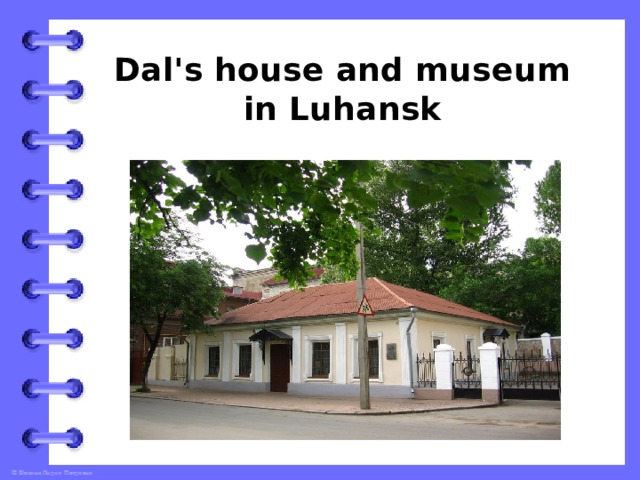
Dal's house and museum in Luhansk
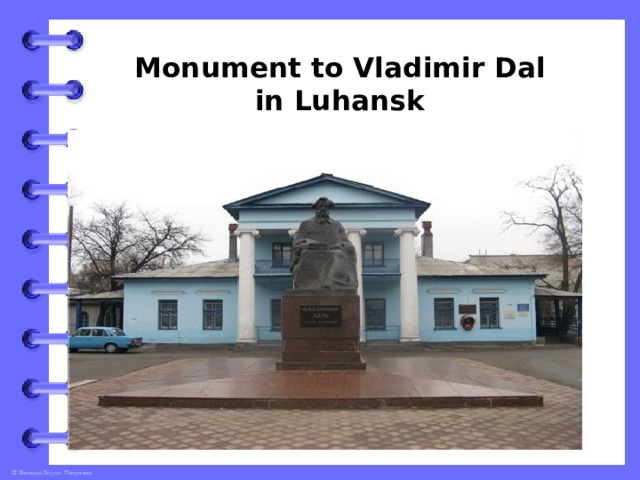
Monument to Vladimir Dal in Luhansk
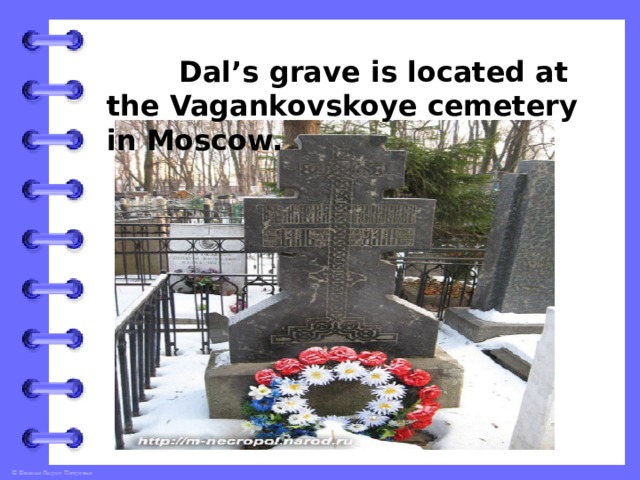
Dal’s grave is located at the Vagankovskoye cemetery in Moscow.
Answer the questions
1.When was V.Dal born?
2.Where was V.Dal born?
3.What did V.Dal do during his lifetime?
4.What was V.Dal’s pen name?
5.Who was his father?
6.Who was his mother?
Answer the questions
7.What did V.Dal create?
8.How many words and proverbs does it include?
9.Did V.Dal know а foreign language ?
10. How many foreign languages did V.Dal know?
Answer the questions
11. Describe and tell about the events:
a) 1814-1826
b) 1819
c) 1826
d) 1832
e) 1838
12.What did V.Dal publish in 1832?
Answer the questions
13.When did V.Dal make an acquaintance with A Pushkin?
14.Are there V.Dal’s museums and monuments?
15.Where are there V.Dal’s museums and monuments?
16.When did V.Dal die?


 Презентация "Dal’s 220th birthday anniversary" (1.87 MB)
 0
0 216
216 0
0 Нравится
0
Нравится
0


